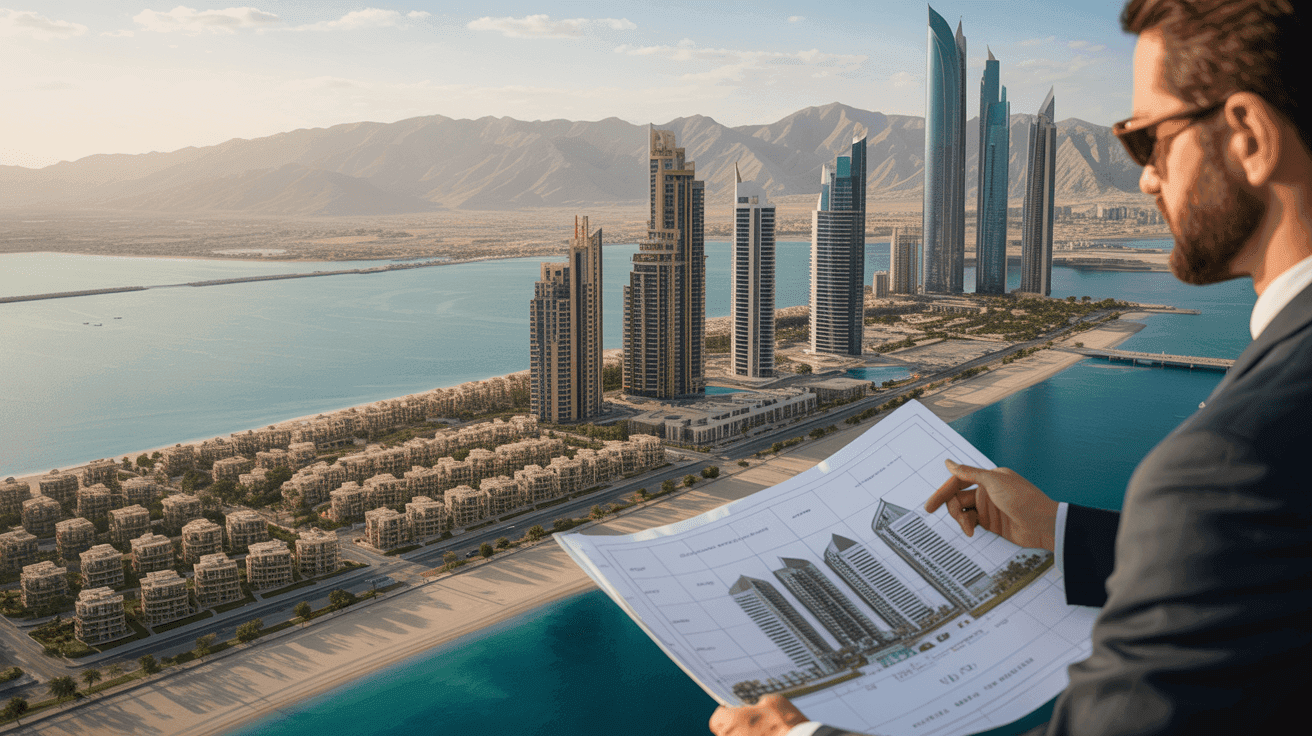
Beyond the Hype: A Practical Guide to Off-Plan Investing in the UAE
Discover the realities of off-plan property investment in the UAE with our comprehensive guide covering risks, rewards, market analysis, and expert investment strategies.
Table Of Contents
- Understanding Off-Plan Property Investment in the UAE
- The Current State of UAE's Off-Plan Market
- Advantages of Off-Plan Investment
- Navigating the Risks of Off-Plan Purchases
- Emerging Hotspots: Why Ras Al Khaimah Deserves Your Attention
- Developer Reputation: The Critical Selection Factor
- Legal Considerations for UAE Property Investors
- Financial Planning for Off-Plan Investments
- Creating a Strategic Off-Plan Investment Portfolio
- Conclusion: Moving Forward with Confidence
Beyond the Hype: A Practical Guide to Off-Plan Investing in the UAE
The gleaming skylines of Dubai, Abu Dhabi, and increasingly, Ras Al Khaimah, stand as testaments to the UAE's remarkable real estate vision. Behind these architectural marvels lies a sophisticated investment ecosystem where off-plan properties represent both significant opportunity and considerable complexity.
For discerning investors, the allure of off-plan property investment extends far beyond the glossy brochures and attractive payment plans. It offers the potential for substantial capital appreciation, prime location selection, and portfolio diversification. However, navigating this market requires more than enthusiasm—it demands strategic insight, market knowledge, and careful due diligence.
This comprehensive guide cuts through the marketing hyperbole to deliver practical, actionable insights into the UAE's off-plan property market. Whether you're considering your first investment or looking to expand an existing portfolio, we'll explore the genuine advantages, acknowledge the real risks, and provide the analytical framework needed to make informed investment decisions in one of the world's most dynamic real estate markets.
Understanding Off-Plan Property Investment in the UAE
Off-plan property investment refers to purchasing properties directly from developers before or during their construction phase. This investment approach has become a cornerstone of the UAE's real estate market, particularly in Dubai and emerging emirates like Ras Al Khaimah.
The concept itself is straightforward: investors purchase properties based on architectural plans, 3D renderings, and developer promises, typically securing more favourable terms than would be available post-completion. What makes the UAE's off-plan market distinctive, however, is its scale, regulatory framework, and integration with the nation's broader economic vision.
The UAE government has implemented robust regulations to protect off-plan investors, including mandatory escrow accounts, construction-linked payment plans, and the registration of all developments with relevant authorities. For instance, Dubai's Real Estate Regulatory Agency (RERA) and the Abu Dhabi Department of Municipalities and Transport provide oversight that has significantly enhanced investor confidence in recent years.
The maturation of this regulatory environment marks a significant evolution from the pre-2008 era, offering investors considerably more protection and transparency. Today's off-plan investments in the UAE operate within a framework designed to balance developer flexibility with investor security—a crucial consideration for anyone entering this market.
The Current State of UAE's Off-Plan Market
The UAE's off-plan property market in 2023-2024 presents a nuanced picture characterised by regional variations, evolving buyer preferences, and shifting macroeconomic factors.
In established markets like Dubai, off-plan sales have remained robust despite global economic headwinds. According to recent data from the Dubai Land Department, off-plan transactions represented approximately 60% of total property sales in the emirate over the past year, with particular strength in the luxury and ultra-luxury segments.
However, the most interesting developments are occurring in emerging markets within the UAE. Ras Al Khaimah, for example, has seen off-plan sales increase by over 30% year-on-year, driven by lower entry points, larger spaces, and stunning natural surroundings that offer a compelling alternative to Dubai's urban landscape.
Several factors are influencing the current market dynamics:
- Post-pandemic lifestyle reassessment has increased demand for spacious living environments with access to natural surroundings
- The UAE's successful handling of recent global challenges has reinforced its reputation as a safe haven for international capital
- Recent visa reforms, including the Golden Visa programme, have strengthened the case for long-term property investment
- Rising construction costs are beginning to influence pricing strategies, particularly for new launches
For investors, this complex landscape necessitates a more sophisticated approach than in previous market cycles—one that accounts for both regional distinctions and property-specific factors that influence potential returns.
Advantages of Off-Plan Investment
The strategic advantages of off-plan property investment in the UAE extend beyond the commonly cited benefits, offering astute investors several distinct opportunities:
Capital Growth Potential: Perhaps the most compelling advantage is the potential for significant appreciation between purchase and completion. In prime developments within growing areas like Ras Al Khaimah, early investors have realised capital appreciation of 25-40% by completion. This growth trajectory is often most pronounced in emerging districts where infrastructure development significantly enhances location value.
Favourable Payment Structures: UAE developers have pioneered innovative payment plans that reduce initial capital requirements. The standard 30/70 or 40/60 structures (percentage paid during construction versus at/after completion) allow investors to secure assets with relatively modest initial outlays. Some developers now offer post-handover payment plans extending 3-5 years after completion, essentially providing built-in financing.
Premium Location Access: Early investment in off-plan projects often provides access to locations that would otherwise be prohibitively expensive. This is particularly evident in Ras Al Khaimah's exclusive waterfront developments, where pre-launch investors can secure prime positions at entry prices.
Customisation Opportunities: Early-stage investment frequently offers layout selection, finish customisation, and occasionally, unit merging options that aren't available in completed properties. This flexibility allows investors to optimise units for specific market segments or personal preferences.
Tax Efficiency: The UAE's favourable tax environment—featuring no income tax, capital gains tax, or property tax—makes the total return profile particularly attractive when compared to many international markets with more complex tax implications for property investors.
These advantages, when leveraged strategically, can deliver exceptional returns. However, they must be balanced against the inherent risks and liquidity considerations of the off-plan model, which we'll explore in subsequent sections.
Navigating the Risks of Off-Plan Purchases
Whilst the potential rewards of off-plan investment are considerable, prudent investors must approach this market with a clear understanding of the associated risks and mitigation strategies.
Completion Risk: Despite regulatory improvements, project delays remain a reality in the UAE's construction landscape. These can range from minor handover extensions to significant delays that impact investment timelines. To mitigate this risk:
- Research the developer's track record for on-time delivery
- Review construction progress reports and milestone achievements
- Consider the complexity of the project design as an indicator of potential delays
- Ensure contracts include compensation clauses for significant delays
Quality Variation: The final product may differ from showroom expectations in terms of finishes, layouts, or community facilities. Strategic approaches to manage this risk include:
- Reviewing delivered projects by the same developer to assess quality consistency
- Understanding precisely which elements are contractually guaranteed versus indicative
- Conducting thorough site visits during construction if possible
- Establishing relationships with project managers for regular updates
Market Fluctuation: The period between purchase and completion exposes investors to market cycles that could affect valuations. Investors can mitigate this through:
- Phase-based investment approaches rather than single large commitments
- Focus on areas with strong fundamentals beyond short-term market sentiment
- Stress-testing investment cases against various market scenarios
- Considering counter-cyclical investment strategies
Liquidity Considerations: Off-plan investments typically have reduced liquidity until project completion approaches. This constraint can be managed by:
- Aligning investment timelines with personal liquidity needs
- Understanding the secondary market conditions for specific developers and areas
- Establishing relationships with agencies specialising in off-plan resales
- Creating portfolio diversity with varying completion timelines
The most successful off-plan investors in the UAE approach risk management systematically, developing a framework that evaluates each opportunity against these potential challenges while establishing clear mitigation strategies.
Emerging Hotspots: Why Ras Al Khaimah Deserves Your Attention
Whilst Dubai has long dominated discussions about UAE property investment, Ras Al Khaimah (RAK) has emerged as perhaps the most compelling opportunity for forward-looking investors seeking both value and growth potential.
This northernmost emirate offers a distinctive investment proposition based on several converging factors:
Strategic Development Vision: RAK's government has implemented a clear development strategy focusing on sustainable tourism, manufacturing, and lifestyle communities. The RAK Economic Zone and the emirate's tourism development authority have created frameworks that support long-term growth without the overcrowding concerns facing some parts of Dubai.
Natural Geography Advantage: Unlike other emirates, RAK features a unique combination of pristine beaches, dramatic mountains, and desert landscapes. This natural endowment creates opportunities for distinctive developments that command premium values, particularly along the coastline and in elevated positions with panoramic views.
Value Proposition: Property in RAK currently offers significantly more space per investment dirham compared to Dubai or Abu Dhabi, with beachfront properties available at 30-40% lower price points than equivalent Dubai locations. This value gap represents substantial appreciation potential as the emirate's infrastructure and amenities continue to develop.
Infrastructure Investment: The ongoing expansion of road networks, including the extension of Sheikh Mohammed bin Zayed Road, has reduced travel time to Dubai to under an hour. Planned transportation improvements, including potential rail connections, will likely compress this further, enhancing RAK's appeal for those seeking proximity to Dubai's amenities without its property premiums.
Tourism Growth Trajectory: With annual visitor numbers increasing by double digits pre-pandemic and recovery exceeding expectations, RAK's tourism sector is creating robust rental demand, particularly for quality properties in prime locations. The emirate's focus on adventure, wellness, and cultural tourism attracts higher-spending visitors, supporting premium rental yields.
For investors, RAK presents an opportunity to enter a market at an earlier stage of its development cycle compared to Dubai, potentially capturing greater appreciation as the emirate executes its growth strategy over the coming decade.
Developer Reputation: The Critical Selection Factor
In UAE's off-plan market, developer selection represents perhaps the single most important decision factor, fundamentally influencing both investment risk and potential returns.
The UAE property landscape features developers ranging from government-backed entities with extensive portfolios to boutique firms focusing on niche segments. This diversity offers investors choices but necessitates careful evaluation across several dimensions:
Financial Stability: The developer's financial foundation directly impacts their ability to complete projects regardless of market fluctuations. Indicators to assess include:
- Corporate structure and backing (government-linked, public company, private entity)
- Project funding mechanisms and equity contribution levels
- Diversification of revenue streams beyond the specific development
- Historical navigation of market downturns
Delivery Track Record: Past performance provides valuable insights into likely future execution. Key elements to investigate include:
- Percentage of projects delivered on schedule
- Quality consistency between marketed specifications and delivered product
- Handling of project modifications and buyer communications
- After-sales service and warranty fulfillment approaches
Design and Innovation Approach: Developers with distinctive design philosophies often create properties that maintain premium positions in both sales and rental markets. Evaluation should consider:
- Architectural partnerships and design consistency
- Integration of technology and sustainability features
- Space utilisation efficiency and adaptability
- Community planning beyond individual units
Market Positioning and Brand Equity: Developer brands carry significant weight in the UAE market, influencing everything from finance terms to resale values. Assessment should include:
- Market perception across investor and end-user segments
- Price premium commanded relative to comparable developments
- Secondary market performance of previous projects
- Brand trajectory and evolution strategy
The most sophisticated investors maintain detailed developer assessment matrices, regularly updated with performance metrics and market feedback. This systematic approach allows for calibrated risk assessment when evaluating new opportunities against established performance patterns.
Legal Considerations for UAE Property Investors
The UAE's property legal framework has evolved substantially over the past decade, creating a more transparent and secure environment for off-plan investors. However, navigating this framework effectively requires understanding several key areas:
Ownership Structures: The UAE offers various ownership frameworks depending on location and investor nationality:
- Freehold: Provides full ownership rights, available to all nationalities in designated areas
- Usufruct: Long-term right to use and benefit from property (typically 99 years)
- Musataha: Right to develop land for specific periods (up to 50 years)
The selection of appropriate structure should align with investment objectives, tax considerations, and exit strategy planning.
Contract Protection: Off-plan Sale and Purchase Agreements (SPAs) in the UAE have become increasingly standardised, but still require careful review regarding:
- Handover conditions and quality specifications
- Delay compensation mechanisms
- Developer termination rights
- Assignment and resale provisions before completion
- Maintenance obligations and service charge frameworks
Escrow Requirements: All emirates now implement escrow regulations for off-plan developments, though specific requirements vary. Understanding the jurisdiction's escrow rules provides insight into:
- Construction-linked payment protections
- Fund release conditions and developer access
- Project completion guarantees
- Investor rights in case of project cancellation
Registration Procedures: Each emirate maintains its own property registration system. In Dubai, this includes the Oqood pre-registration for off-plan properties, while Ras Al Khaimah operates through its own land department. Proper registration is essential for:
- Legal recognition of ownership rights
- Protection against unauthorised sales
- Future transferability of the property
- Access to dispute resolution mechanisms
Given these complexities, many investors engage specialist property legal advisors to review documentation, verify development approvals, and ensure compliance with relevant regulations before committing to off-plan purchases.
Financial Planning for Off-Plan Investments
Effective financial planning for UAE off-plan investments requires a multidimensional approach that extends well beyond the initial purchase decision. Sophisticated investors develop comprehensive financial strategies encompassing:
Payment Schedule Management: UAE off-plan payment plans typically follow construction-linked schedules. Strategic approaches include:
- Aligning personal cash flow or investment fund distributions with payment milestones
- Negotiating customised payment schedules where possible
- Creating liquidity buffers for unexpected acceleration of payment requirements
- Understanding the implications of missed payments and grace period provisions
Financing Considerations: While many investors purchase off-plan properties with cash, financing options are increasingly available:
- Evaluating developer-provided financing versus bank mortgage options
- Understanding how mortgage pre-approvals work for off-plan properties
- Assessing the impact of interest rate fluctuations on investment returns
- Comparing conventional and Islamic financing structures and implications
Currency Exposure Management: For international investors, currency fluctuations between purchase and completion can significantly impact overall returns:
- Developing hedging strategies for significant exposure
- Creating natural hedges through portfolio diversification
- Timing of fund transfers to benefit from favourable exchange rates
- Maintaining multi-currency accounts to reduce conversion costs
Tax Planning Implications: While the UAE imposes no income or capital gains taxes, international investors must consider home country tax obligations:
- Understanding tax residency implications of UAE property ownership
- Structuring purchases to optimise global tax efficiency
- Planning for potential inheritance or wealth taxes in home jurisdictions
- Maintaining appropriate documentation for tax compliance
Exit Strategy Financing: Sophisticated investors plan exit strategies before purchase, including financial considerations for:
- Timing market cycles for optimal divestment
- Reinvestment approaches for captured appreciation
- Tax-efficient profit repatriation
- Leveraging equity for portfolio expansion
A well-structured financial plan transforms off-plan investment from a speculative endeavour to a strategic wealth-building mechanism, particularly when aligned with broader portfolio objectives.
Creating a Strategic Off-Plan Investment Portfolio
Beyond individual property selection, sophisticated investors approach UAE off-plan opportunities through a portfolio strategy lens, seeking to balance risk, returns, and market exposure.
Diversification Principles: Effective portfolio construction in UAE off-plan investing typically includes diversification across:
- Geographical locations within the UAE (established versus emerging areas)
- Property types (residential, commercial, hospitality components)
- Unit sizes and configurations targeting different market segments
- Completion timelines to manage liquidity and market cycle exposure
- Developer exposure to mitigate concentrated counterparty risk
Strategic Allocation Approaches: Investors frequently employ allocation frameworks based on risk profiles:
- Core holdings in prime locations with established developers (40-60% of portfolio)
- Growth-focused investments in emerging locations with strong fundamentals (30-40%)
- Opportunistic allocations to high-potential but higher-risk projects (10-20%)
Value-Add Opportunities: Beyond standard off-plan purchases, sophisticated strategies might include:
- Early-phase investments with pre-launch pricing through developer relationships
- Bulk purchase negotiations for multiple units with substantial discounts
- Strategic selections of specific units with unique attributes (corner positions, view corridors, etc.)
- Investments in areas targeted for infrastructure improvements or zoning changes
Portfolio Management Discipline: Maintaining portfolio strength requires ongoing management activities:
- Regular revaluation of holdings against market comparables
- Assessment of hold/sell decisions at key milestones
- Reinvestment strategies for matured investments
- Documentation of portfolio performance metrics
The most successful investors in UAE off-plan properties recognise that strategic advantage comes not merely from identifying attractive individual opportunities, but from constructing portfolios where elements work in concert to achieve specific wealth objectives while managing downside risks.
At Azimira Real Estate, we assist investors in developing these bespoke portfolio strategies, leveraging our extensive market knowledge and access to exclusive opportunities, particularly in the high-potential Ras Al Khaimah market.
Conclusion: Moving Forward with Confidence
The UAE's off-plan property market represents a sophisticated investment landscape that rewards strategic thinking, diligent research, and disciplined execution. Beyond the marketing promises and glossy brochures lies a market where substantial wealth creation remains possible for investors who approach opportunities with both enthusiasm and analytical rigour.
As we've explored throughout this guide, successful off-plan investing requires a multidimensional approach that considers:
- Developer quality and track record as fundamental selection criteria
- Location fundamentals that support long-term appreciation
- Legal and financial structures that protect investor interests
- Portfolio construction principles that balance opportunity with risk management
- Emerging market dynamics, particularly in high-potential areas like Ras Al Khaimah
The current market cycle presents distinctive opportunities, with prime developments in emerging locations offering particularly compelling value propositions. The regulatory environment has matured significantly, providing investors with greater protection than in previous cycles, while innovative payment structures have made quality developments accessible to a broader investor base.
However, these opportunities must be approached with clear-eyed recognition of the inherent risks and complexities. The variability in developer quality, potential for construction delays, and market fluctuations during the construction period all necessitate thorough due diligence and strategic planning.
For investors ready to move beyond surface-level analysis and marketing hype, the UAE's off-plan market continues to offer significant potential for capital appreciation, strong yields, and portfolio diversification—particularly for those who identify opportunities in emerging locations before they reach peak awareness.
Ready to explore premium off-plan investment opportunities in the UAE's most promising markets? Contact Azimira Real Estate for a personalised consultation with our investment specialists who can provide privileged access to exclusive pre-launch and off-market properties with exceptional growth potential. Schedule your consultation today.
Related articles
What Counts as Good Real Estate Investments in 2026
Learn what makes good real estate investments in 2026, from net yield and demand signals to legal checks, exit plans and UAE opportunities.

Investors Needed for Real Estate? Start With This Plan
Investors needed for real estate? Use this practical plan to define strategy, numbers, due diligence and partners before raising capital.

Investment Marketing Tactics Developers Use at Launch
Understand investment marketing tactics developers use at launch, from scarcity to incentives, and learn how to assess UAE off-plan deals.