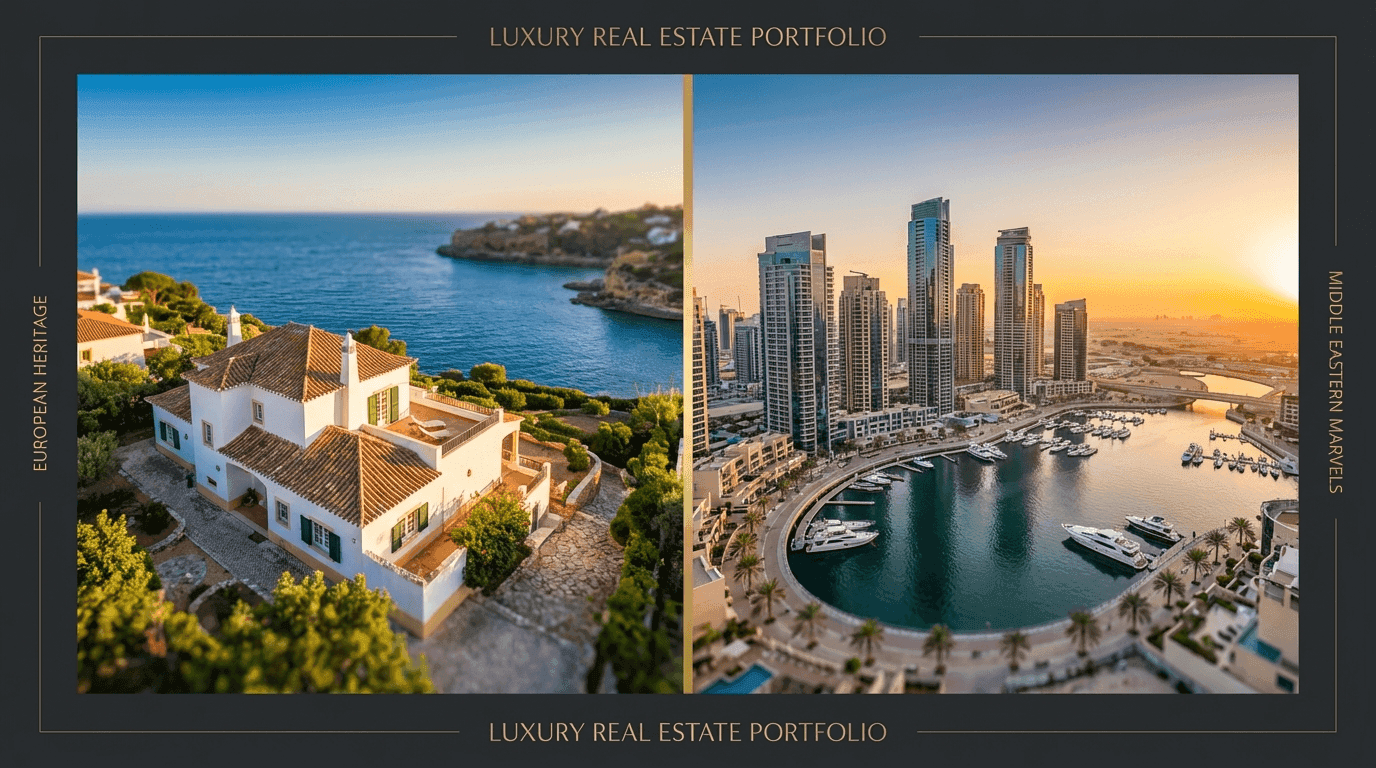
Comparing Residency Routes: Portugal D7 vs UAE Golden Visa
Compare Portugal D7 and UAE Golden Visa residency programmes. Discover investment requirements, tax implications, and lifestyle benefits to choose the right path.
Table Of Contents
- Understanding the Residency Landscape
- Portugal D7 Visa: The Passive Income Route
- UAE Golden Visa: The Investment Pathway
- Investment Requirements Compared
- Tax Implications: A Critical Comparison
- Residency Obligations and Flexibility
- Family Inclusion and Benefits
- Pathway to Citizenship
- Lifestyle and Location Considerations
- Which Route Suits Your Investment Strategy?
The global mobility landscape has transformed dramatically over the past decade, with discerning investors seeking residency programmes that offer not merely a second passport, but genuine lifestyle enhancement, tax efficiency, and wealth preservation opportunities. Among the most popular routes for international investors are Portugal's D7 Visa and the UAE Golden Visa—two programmes that, whilst both offering residency benefits, cater to distinctly different investor profiles and objectives.
For investors considering their next strategic move, understanding the nuanced differences between these programmes is essential. The Portugal D7 Visa attracts those seeking European residency through passive income, whilst the UAE Golden Visa appeals to investors prioritising tax efficiency, capital growth, and a dynamic business environment. Each route offers compelling advantages, yet the optimal choice depends entirely on your financial circumstances, lifestyle preferences, and long-term investment strategy.
This comprehensive comparison examines both programmes across critical dimensions—investment requirements, tax implications, residency obligations, family benefits, and lifestyle considerations—providing you with the insights necessary to make an informed decision aligned with your wealth management objectives.
Understanding the Residency Landscape
The competition for global talent and capital has intensified amongst nations, leading to increasingly attractive residency programmes designed to draw high-net-worth individuals, entrepreneurs, and investors. Both Portugal and the UAE have positioned themselves strategically within this landscape, though their approaches differ fundamentally.
Portugal's D7 Visa, established as part of the country's broader appeal to retirees and remote workers, emphasises sustainable passive income and European lifestyle benefits. The programme has gained particular traction amongst those seeking a Mediterranean quality of life combined with access to the Schengen Area. Meanwhile, the UAE Golden Visa represents the Emirates' commitment to establishing itself as a global hub for business, innovation, and wealth management, offering long-term residency to investors who contribute significantly to the nation's economy.
Understanding these fundamental differences in programme philosophy helps clarify which route aligns with your personal and financial objectives. The D7 caters primarily to lifestyle migrants with stable passive income, whilst the Golden Visa targets active investors seeking capital appreciation and business opportunities in one of the world's fastest-growing economies.
Portugal D7 Visa: The Passive Income Route
The Portugal D7 Visa, officially known as the Passive Income Visa, provides a pathway to Portuguese residency for individuals who can demonstrate sufficient recurring income without needing to work in Portugal. This programme particularly appeals to retirees, remote workers, and individuals with substantial investment portfolios generating regular returns.
Eligibility and Income Requirements
Applicants must demonstrate passive income equivalent to Portugal's minimum wage, which currently stands at approximately €9,870 annually for the primary applicant. Additional family members require proportional increases—50% for a spouse and 30% for each dependent child. Acceptable income sources include pensions, rental income, dividends, royalties, and investment returns. Crucially, applicants must prove this income is stable, recurring, and likely to continue throughout their residency period.
The application process requires substantial documentation, including proof of income for the preceding 12 months, Portuguese tax identification, evidence of accommodation in Portugal (either rental agreement or property ownership), Portuguese bank account, health insurance coverage, and a clean criminal record. Processing times typically range from four to six months, with initial residence permits granted for two years, renewable for successive three-year periods.
Practical Considerations
Whilst the D7 doesn't mandate property purchase, many applicants choose to acquire Portuguese real estate both to satisfy accommodation requirements and to establish deeper roots in the country. Portugal's property market, particularly in Lisbon and the Algarve, has appreciated considerably over recent years, though recent regulatory changes have introduced additional complexity for foreign investors. The programme requires holders to spend a minimum of 16 months in Portugal during the initial two-year period, with subsequent renewals requiring similar physical presence.
UAE Golden Visa: The Investment Pathway
The UAE Golden Visa represents one of the region's most attractive long-term residency programmes, offering investors, entrepreneurs, and talented professionals the opportunity to establish themselves in a jurisdiction renowned for its business-friendly environment, strategic location, and exceptional infrastructure. The programme has evolved considerably since its introduction, with recent reforms expanding eligibility and streamlining application processes.
Investment Routes and Options
The Golden Visa provides multiple pathways to qualification, with property investment remaining the most accessible route for many international investors. The current requirements include purchasing property valued at a minimum of AED 2 million (approximately £430,000) for a 10-year visa, with the option to obtain a 5-year visa through property investment of AED 750,000 (approximately £161,000). These thresholds represent significant opportunities, particularly given the UAE's robust property market performance and strong appreciation forecasts across key emirates.
Alternative routes include establishing a company in the UAE with a minimum capital of AED 500,000, making financial investments or savings of at least AED 2 million, or qualifying as a specialist in critical fields such as medicine, engineering, science, or culture. The programme's flexibility allows investors to select the pathway that best aligns with their broader wealth management and lifestyle objectives.
Application Process and Timeline
The Golden Visa application process has become increasingly streamlined, with most applications processed within 30 to 60 days. Required documentation includes passport copies, Emirates ID application, proof of property ownership or investment, health insurance coverage, and medical fitness certificates. Notably, the UAE imposes no minimum stay requirements, allowing visa holders complete flexibility in how they utilise their residency status. This represents a significant advantage for global investors maintaining business interests across multiple jurisdictions.
For investors considering the property route, Azimira's exclusive RAK off-plan projects provide access to premium developments specifically designed to meet Golden Visa requirements whilst offering exceptional capital growth potential. The Ras Al Khaimah market, in particular, presents compelling opportunities for investors seeking to combine residency qualification with strategic property investment in one of the UAE's fastest-appreciating markets.
Investment Requirements Compared
When evaluating these programmes purely from an investment perspective, the financial commitments differ substantially not just in quantum but in nature and expected returns.
Portugal D7 Financial Commitment
The D7 Visa requires no mandatory investment, though applicants must demonstrate passive income of approximately €9,870 annually. Many applicants choose to purchase Portuguese property, with entry-level apartments in desirable areas starting from €200,000 to €300,000. However, Portugal's property market has matured considerably, with annual appreciation rates moderating to 3-7% in most markets. Additionally, property owners face ongoing costs including IMI property tax (0.3-0.8% annually), maintenance fees, and utilities.
The programme also carries hidden costs that applicants should consider: Portuguese tax residency implications (potentially triggering worldwide income taxation), mandatory health insurance (approximately €50-100 monthly), legal and administrative fees for visa processing (€2,000-4,000), and the opportunity cost of maintaining funds in Portugal rather than higher-growth markets.
UAE Golden Visa Financial Commitment
The UAE Golden Visa's property investment route requires AED 2 million (approximately £430,000) for a 10-year visa. Whilst this represents a higher upfront commitment than typical Portuguese property purchases, the investment characteristics differ fundamentally. UAE property, particularly in emerging markets like Ras Al Khaimah, has demonstrated robust appreciation, with certain developments achieving double-digit annual returns. The absence of property taxes, capital gains tax, and rental income tax means investors retain a substantially higher proportion of their returns.
Moreover, UAE property investments, particularly off-plan purchases in strategic locations, offer significant capital appreciation potential. Investing in RAK property provides access to one of the region's highest-growth markets, where carefully selected developments have delivered returns of 15-25% annually. When considered alongside the residency benefits, the Golden Visa investment route presents a compelling value proposition for investors prioritising both residency and portfolio growth.
Tax Implications: A Critical Comparison
For high-net-worth individuals, tax considerations often prove decisive when selecting a residency programme. The contrast between Portugal and the UAE could scarcely be more pronounced.
Portugal's Tax Framework
Portugal operates a worldwide taxation system for tax residents, with progressive income tax rates reaching 48% at the highest brackets. Whilst the country previously offered an attractive Non-Habitual Resident (NHR) tax regime providing significant exemptions for ten years, this programme closed to new applicants in 2024, fundamentally altering Portugal's tax attractiveness for new residents.
Current tax residents face taxation on Portuguese-source income and, depending on circumstances, potentially worldwide income. Property owners pay annual IMI tax, whilst rental income is taxed at standard rates (though with deductions available). Capital gains on property sales are taxed at 50% of an individual's marginal rate for assets held over 24 months. Additionally, Portugal imposes inheritance and gift taxes, creating potential complications for wealth transfer planning.
UAE's Tax Advantage
The UAE maintains one of the world's most favourable tax regimes, with no personal income tax, no capital gains tax, no inheritance tax, and no wealth tax. This framework allows investors to retain substantially more of their investment returns and income. Whilst the UAE introduced corporate tax at 9% for businesses exceeding AED 375,000 in annual profits, this remains amongst the world's lowest rates and doesn't affect personal investment income.
For property investors specifically, the UAE's tax efficiency is remarkable. Rental income, capital appreciation, and eventual sale proceeds remain entirely tax-free for individual investors. When combined with the absence of currency controls and the ability to repatriate funds freely, the UAE offers unparalleled flexibility for wealth management and capital deployment.
The tax differential between these jurisdictions can amount to hundreds of thousands of pounds over a residency period, making this consideration paramount for investors with substantial income or capital gains.
Residency Obligations and Flexibility
The practical requirements of maintaining residency status vary considerably between programmes, significantly impacting lifestyle flexibility.
Portugal D7 Requirements
Portugal's D7 Visa imposes specific physical presence requirements that demand genuine commitment to residing in the country. Initial permit holders must spend at least 16 months in Portugal during their first two-year residency period, with subsequent renewals requiring similar presence. These requirements mean D7 holders must genuinely establish Portugal as their primary residence base, limiting flexibility for those maintaining business interests or family connections elsewhere.
Additionally, achieving permanent residency after five years requires demonstrating basic Portuguese language proficiency (A2 level), creating an additional obligation that may prove challenging for older applicants or those without aptitude for language learning. The programme's structure clearly targets individuals seeking to genuinely integrate into Portuguese society rather than those seeking residency flexibility.
UAE Golden Visa Flexibility
In stark contrast, the UAE Golden Visa imposes no minimum stay requirements whatsoever. Visa holders need only enter the UAE once every 180 days to maintain their residency status—a requirement easily satisfied through brief visits. This extraordinary flexibility allows investors to maintain their existing business operations, family arrangements, and lifestyle whilst enjoying the benefits of UAE residency.
This flexibility proves particularly valuable for international investors, business owners with global operations, and families maintaining connections across multiple countries. The ability to hold UAE residency without relocating entirely provides strategic optionality, allowing investors to gradually transition their operations and lifestyle according to their own timeline and preferences.
Family Inclusion and Benefits
Family considerations often prove critical in residency decisions, with both programmes offering family inclusion though with different scope and conditions.
Portugal D7 Family Benefits
The D7 Visa allows inclusion of spouses and dependent children, with each additional family member requiring proportional income increases (50% for spouse, 30% per child). Dependent parents may also qualify under certain circumstances, though requirements prove more stringent. All family members receive the same residency rights, including access to Portugal's public healthcare system and education institutions.
Children benefit from Portugal's education system, with access to public schools and international institutions. However, quality varies considerably by location, with Lisbon and Porto offering the strongest international school options. The programme provides a genuine pathway for families seeking European lifestyle and educational opportunities.
UAE Golden Visa Family Benefits
The UAE Golden Visa extends to spouses, children of any age (a significant advantage over many programmes that restrict dependent children to those under 18 or 21), and up to three domestic helpers. Parents of the primary visa holder may also qualify, subject to meeting specific criteria. This generous family inclusion makes the programme particularly attractive for multigenerational households.
The UAE offers exceptional international schooling options, with Dubai and Abu Dhabi hosting campuses of numerous prestigious international institutions following British, American, IB, and other curricula. Healthcare standards are world-class, with cutting-edge facilities staffed by internationally trained professionals. The family-friendly infrastructure, safety standards, and lifestyle amenities make the UAE particularly appealing for families with children.
Pathway to Citizenship
For investors considering long-term planning, eventual citizenship possibilities merit consideration.
Portugal Citizenship Route
Portugal offers a clear pathway to citizenship after five years of legal residency, subject to demonstrating Portuguese language proficiency (B1 level), maintaining ties to the country, and passing a clean criminal record check. Portuguese citizenship provides access to all EU rights, including freedom of movement, residence, and work throughout the European Union—a significant advantage for those prioritising European integration.
However, achieving citizenship requires genuine commitment to Portugal, including substantial physical presence and cultural integration. The language requirement proves challenging for many applicants, potentially extending timelines or preventing qualification entirely.
UAE Citizenship Considerations
The UAE recently introduced limited pathways to citizenship for exceptional investors, professionals, and talents, though qualification criteria remain stringent and discretionary. The programme remains highly selective, with citizenship granted primarily to individuals making extraordinary contributions to Emirati society, economy, or culture.
For most Golden Visa holders, citizenship remains unlikely, making the programme primarily attractive for long-term residency rather than passport acquisition. However, the 10-year renewable visa provides indefinite residency security for those meeting basic requirements, offering practical permanence without formal citizenship.
Lifestyle and Location Considerations
Beyond financial and legal considerations, lifestyle preferences often prove decisive in residency choices.
Portugal's Lifestyle Appeal
Portugal offers Mediterranean climate, rich cultural heritage, excellent cuisine, and relatively affordable cost of living compared to other Western European nations. The slower pace of life appeals to retirees and those seeking work-life balance, whilst Lisbon and Porto provide cosmopolitan amenities for those desiring urban sophistication. The country's beaches, golf courses, and natural beauty attract outdoor enthusiasts.
However, economic opportunities remain limited compared to major European economies, with youth unemployment persistently high and wage growth modest. The bureaucratic environment can prove frustrating, with administrative processes often requiring patience and persistence. For entrepreneurs and business-focused individuals, Portugal's economy may feel constraining.
UAE's Dynamic Environment
The UAE, particularly Dubai and Abu Dhabi, offers world-class infrastructure, exceptional connectivity to global markets, and a truly international community. The business environment fosters entrepreneurship, with streamlined company formation, access to regional markets, and networking opportunities with global business leaders. The lifestyle combines luxury amenities, cultural attractions, cutting-edge dining and entertainment, and year-round sunshine.
The UAE's strategic location provides unparalleled access to markets across the Middle East, Africa, and Asia, making it ideal for international business operations. The safety, cleanliness, and efficiency of daily life create an environment where families and professionals thrive. Whilst summer temperatures prove challenging, world-class facilities and infrastructure mitigate climate concerns.
Which Route Suits Your Investment Strategy?
Selecting between these programmes requires honest assessment of your priorities, circumstances, and objectives.
The Portugal D7 Visa suits individuals who:
- Prioritise eventual EU citizenship and European integration
- Have stable passive income but limited capital for investment
- Seek a slower-paced Mediterranean lifestyle
- Can commit to genuine residency and physical presence
- Value cultural heritage and European quality of life
- Accept higher taxation in exchange for EU benefits
The UAE Golden Visa appeals to investors who:
- Prioritise tax efficiency and wealth preservation
- Seek capital appreciation alongside residency benefits
- Require flexibility without minimum stay requirements
- Operate international businesses requiring global mobility
- Value cutting-edge infrastructure and business opportunities
- Prefer a dynamic, growth-oriented environment
For investors seeking to combine residency qualification with strategic property investment, the UAE Golden Visa presents compelling advantages. The programme's property investment route provides access to one of the world's highest-performing real estate markets whilst securing long-term residency in a tax-efficient jurisdiction.
Ras Al Khaimah, in particular, offers exceptional opportunities for investors pursuing this strategy. As the UAE's fastest-growing emirate, RAK combines affordable entry points with robust appreciation potential, creating an ideal environment for investors seeking both Golden Visa qualification and superior returns. Premium off-plan developments in strategic locations provide the dual benefit of meeting investment thresholds whilst positioning investors in high-growth submarkets.
For discerning investors prioritising both residency security and portfolio performance, the UAE Golden Visa route warrants serious consideration. The combination of tax efficiency, investment returns, lifestyle quality, and residency flexibility creates a value proposition that few alternative programmes can match.
The choice between Portugal's D7 Visa and the UAE Golden Visa ultimately reflects your broader life and investment strategy. Whilst the D7 offers a pathway to European residency and eventual citizenship for those with passive income and commitment to Portuguese integration, the UAE Golden Visa provides tax-efficient residency combined with exceptional investment opportunities in one of the world's most dynamic markets.
For investors who view residency not merely as a lifestyle choice but as a strategic component of wealth management, the UAE Golden Visa's combination of benefits proves difficult to surpass. The programme offers tax efficiency that can save hundreds of thousands of pounds over time, property investment opportunities delivering robust returns, complete flexibility without minimum stay requirements, and access to world-class business infrastructure and lifestyle amenities.
The decision requires careful consideration of your specific circumstances, including family situation, business interests, tax exposure, and long-term objectives. However, for investors seeking to maximise both residency benefits and investment returns, the UAE Golden Visa represents a compelling opportunity to achieve multiple objectives through a single strategic decision.
As global mobility options continue evolving, positioning yourself in jurisdictions that combine residency security, tax efficiency, and capital growth potential becomes increasingly valuable. The UAE's commitment to attracting global talent and capital, combined with its robust economic fundamentals and strategic global positioning, suggests the Golden Visa programme will remain amongst the world's most attractive residency options for discerning investors.
Ready to explore how UAE property investment can provide both Golden Visa qualification and exceptional returns? Contact Azimira's expert team today to discover exclusive off-plan opportunities in Ras Al Khaimah and across the UAE, carefully curated to meet Golden Visa requirements whilst delivering superior capital appreciation. Our in-depth market knowledge and access to pre-launch developments ensure you secure the optimal property investment for your residency and wealth management objectives.
Related articles
What Counts as Good Real Estate Investments in 2026
Learn what makes good real estate investments in 2026, from net yield and demand signals to legal checks, exit plans and UAE opportunities.

Investors Needed for Real Estate? Start With This Plan
Investors needed for real estate? Use this practical plan to define strategy, numbers, due diligence and partners before raising capital.

Investment Marketing Tactics Developers Use at Launch
Understand investment marketing tactics developers use at launch, from scarcity to incentives, and learn how to assess UAE off-plan deals.