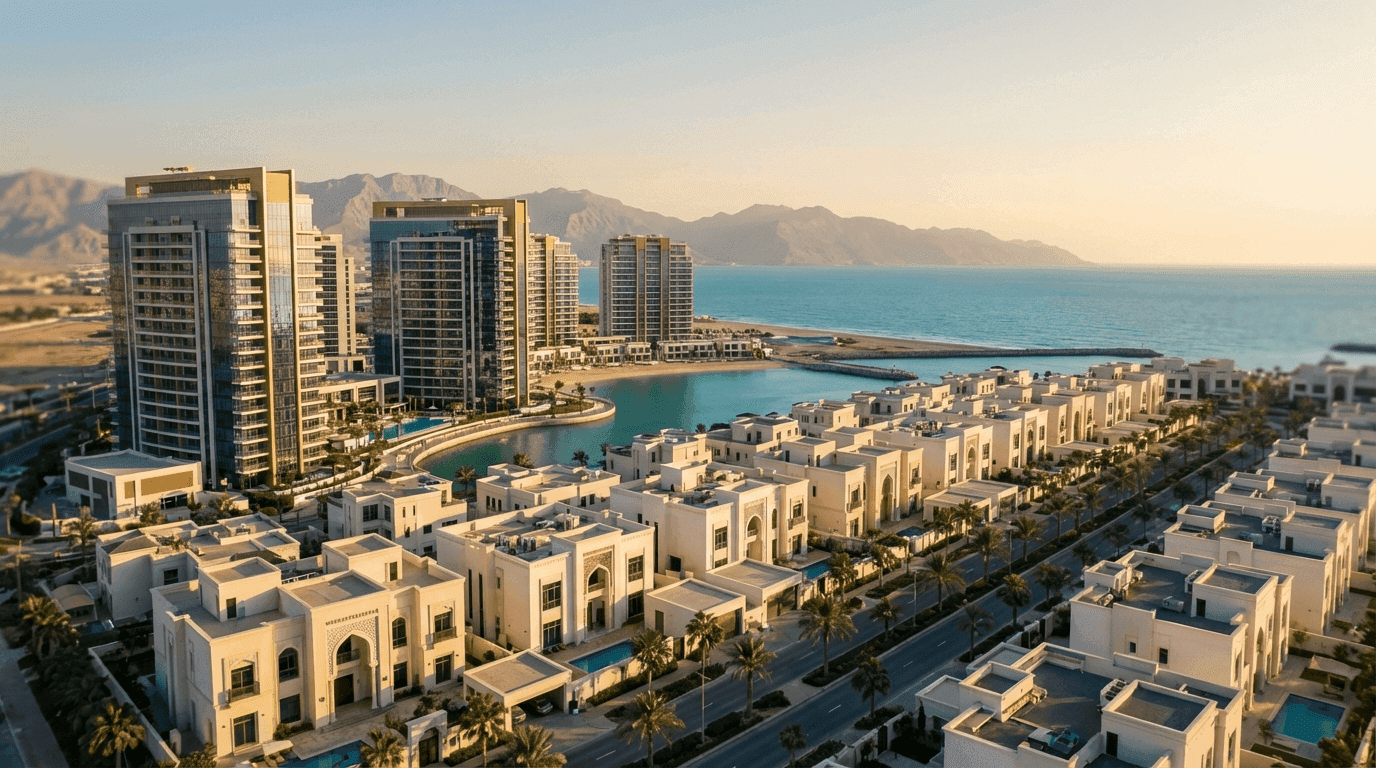
How to Build a Diversified RAK Property Portfolio from Scratch: A Strategic Guide
Discover how to build a profitable, diversified property portfolio in Ras Al Khaimah from the ground up. Expert strategies for RAK investors seeking exceptional returns.
Table Of Contents
- Why RAK Presents Exceptional Portfolio Opportunities
- Understanding Portfolio Diversification in the RAK Market
- Step 1: Establishing Your Investment Foundation
- Step 2: Determining Your Optimal Asset Mix
- Step 3: Strategic Property Selection in RAK
- Step 4: Accessing Off-Plan and Pre-Launch Opportunities
- Step 5: Structuring Your Portfolio for Growth
- Managing Risk Whilst Maximising Returns
- Common Portfolio-Building Mistakes to Avoid
- Working with Specialists for Portfolio Success
The Ras Al Khaimah property market has emerged as one of the UAE's most compelling investment destinations, offering discerning investors an exceptional combination of affordability, growth potential, and strategic positioning. Whilst Dubai and Abu Dhabi have long dominated investment conversations, RAK presents a unique opportunity to build a diversified property portfolio from the ground up—entering an emerging market before it reaches maturity, yet benefiting from established infrastructure and regulatory frameworks.
Building a property portfolio isn't merely about acquiring multiple assets; it's about constructing a strategic collection of properties that work together to generate income, appreciate in value, and provide insulation against market fluctuations. For investors willing to look beyond the emirates' traditional investment centres, RAK offers accessible entry points, lower capital requirements, and impressive yield potential that can accelerate portfolio growth significantly.
This comprehensive guide walks you through the strategic process of building a diversified RAK property portfolio from scratch—from establishing your investment foundation and determining optimal asset allocation to accessing exclusive off-plan opportunities and structuring for long-term growth. Whether you're a first-time investor or an experienced portfolio builder expanding into new markets, you'll discover the frameworks, strategies, and market insights needed to construct a robust RAK portfolio positioned for exceptional returns.
Why RAK Presents Exceptional Portfolio Opportunities
Ras Al Khaimah has transformed dramatically over recent years, evolving from a quiet northern emirate into a dynamic property investment destination. The government's strategic vision, combined with substantial infrastructure investment and progressive regulatory reforms, has created market conditions particularly favourable for portfolio construction. RAK offers property prices typically 40-60% lower than comparable assets in Dubai, allowing investors to acquire multiple properties for the capital that might secure just one unit in more established markets.
The emirate's tourism sector has experienced remarkable growth, with visitor numbers increasing by over 8% annually, driving demand for both short-term holiday rentals and long-term residential accommodation. Major developments including luxury waterfront communities, expansive villa estates, and integrated resort destinations have elevated RAK's profile amongst both end-users and investors. The RAK Properties sector benefits from freehold ownership opportunities in designated areas, long-term residency visa options, and a transparent regulatory framework administered by the Ras Al Khaimah Real Estate Regulatory Authority.
Perhaps most significantly for portfolio builders, RAK remains in an earlier growth phase compared to Dubai's mature market. This positioning provides opportunities to acquire assets before significant appreciation occurs, whilst still benefiting from proven demand drivers, established infrastructure, and the broader UAE economic ecosystem. Historical data from similar emerging markets within the UAE suggests that early-phase investors in well-selected assets have realised capital appreciation ranging from 15-25% over three to five-year holding periods.
Understanding Portfolio Diversification in the RAK Market
Diversification represents the foundational principle of intelligent portfolio construction—spreading investment across different asset types, locations, and risk profiles to optimise returns whilst managing exposure. In the RAK context, diversification operates across several dimensions that savvy investors must understand and implement strategically.
Property type diversification involves balancing your portfolio across apartments, villas, townhouses, and potentially commercial units. Each property category serves different tenant demographics, responds differently to market cycles, and offers distinct yield characteristics. Apartments in urban centres typically deliver higher rental yields but potentially lower capital appreciation, whilst villas in exclusive communities may appreciate more substantially but require higher initial capital and ongoing maintenance.
Geographical diversification within RAK means spreading holdings across different developments and neighbourhoods. Al Marjan Island offers beachfront lifestyle properties appealing to tourists and expatriates, whilst Al Hamra Village provides established communities with proven rental demand. Mina Al Arab presents family-oriented waterfront living, and emerging developments in other RAK zones offer ground-floor opportunities in areas poised for growth. Concentrating exclusively in one development exposes your portfolio to localised risks—construction delays, developer challenges, or neighbourhood-specific demand shifts.
Investment strategy diversification balances immediate cash flow against long-term appreciation. Some properties in your portfolio should generate strong rental yields immediately, providing cash flow to service financing and fund additional acquisitions. Others might be selected primarily for capital growth potential, perhaps in emerging locations or pre-launch developments where entry pricing is most advantageous. The optimal balance depends on your financial position, timeline, and objectives, but most successful portfolios combine both elements rather than pursuing a single strategy exclusively.
Step 1: Establishing Your Investment Foundation
Before acquiring your first RAK property, establishing a solid investment foundation ensures your portfolio develops strategically rather than opportunistically. This foundation encompasses financial preparation, objective clarification, and knowledge development that will guide every subsequent decision.
Begin by conducting a thorough financial assessment of your investment capacity. Calculate your available capital for deposits, considering that UAE property financing typically requires 20-25% down payments for expatriate investors. Evaluate your borrowing capacity if you intend to use mortgage financing, understanding that lenders generally limit debt service to 50% of gross monthly income. Determine your cash flow position—the surplus income available monthly to service mortgages, cover property expenses, and fund ongoing investments.
Articulate clear, specific investment objectives that will drive your portfolio strategy. Are you primarily seeking passive income to supplement employment earnings? Building long-term wealth through capital appreciation? Creating a property portfolio that might eventually replace employment income entirely? Your objectives fundamentally shape appropriate strategies—income-focused investors prioritise high-yield properties with immediate rental returns, whilst wealth-building investors might accept lower initial yields in exchange for superior appreciation prospects.
Develop comprehensive knowledge of RAK's property market, regulatory environment, and investment mechanics. Research the emirate's different communities, understanding their positioning, amenities, and tenant demographics. Familiarise yourself with the legal framework governing property ownership, tenancy regulations, and the processes for property registration with the Ras Al Khaimah Real Estate Regulatory Authority. Understanding these fundamentals prevents costly mistakes and enables you to evaluate opportunities effectively when they arise.
Step 2: Determining Your Optimal Asset Mix
Your portfolio's asset allocation—the proportion of different property types and investment approaches—fundamentally determines its performance characteristics and risk profile. Developing an optimal asset mix requires balancing multiple considerations specific to your circumstances and the RAK market's opportunities.
For investors building their first portfolio with limited capital, a sensible approach often begins with one or two well-selected apartments in established developments with proven rental demand. These properties provide relatively accessible entry points, typically requiring AED 150,000-300,000 in initial capital when financed appropriately. Apartments in communities like Al Hamra Village or established Mina Al Arab developments offer immediate rental income, often yielding 7-9% annually, which provides cash flow whilst you build knowledge and capital for subsequent acquisitions.
As your portfolio expands, introducing property type diversity becomes increasingly important. Adding a villa or townhouse creates exposure to a different tenant segment—typically families seeking longer-term accommodation rather than the transient professional or tourist demographics that dominate apartment markets. Villas generally appreciate more substantially over extended periods, particularly in exclusive communities with limited supply, though they require higher capital and may produce slightly lower percentage yields initially.
Consider incorporating at least one off-plan property selected for exceptional capital growth potential. Off-plan investments in RAK often provide access to below-market pricing, flexible payment plans that ease cash flow requirements, and the opportunity to secure assets in emerging locations before development completion drives values higher. Strategic off-plan selection can accelerate portfolio growth significantly—a well-chosen pre-launch property acquired at AED 600,000 might be worth AED 750,000-800,000 upon completion, creating substantial equity without additional capital investment.
A balanced RAK portfolio for an investor with AED 1-1.5 million in total capital might ultimately comprise two cash-flowing apartments generating immediate income, one villa positioned for long-term appreciation, and one carefully selected off-plan property in an emerging location. This mix provides immediate income, capital growth potential, property type diversification, and exposure to both established and emerging market segments.
Step 3: Strategic Property Selection in RAK
Selecting individual properties that will comprise your portfolio requires systematic evaluation beyond superficial appeal. Each acquisition should satisfy specific criteria aligned with your overall strategy whilst meeting fundamental quality standards that protect your investment.
Location analysis forms the foundation of property selection. Evaluate each potential property's proximity to essential amenities, employment centres, schools, healthcare facilities, and leisure attractions. In RAK, beachfront and waterfront locations command premium pricing but also deliver superior rental demand and appreciation potential. Properties near the upcoming RAK Convention Centre or existing tourist attractions typically perform well in short-term rental markets, whilst family-oriented communities near quality schools appeal to long-term tenants.
Assess the development's quality and the developer's reputation rigorously. Established developers with proven track records of completing projects to specification and maintaining quality standards protect your investment far better than unproven entities offering seemingly attractive pricing. Examine the development's construction quality, finishing standards, amenities, and ongoing management. Well-maintained communities with quality facilities retain value and attract discerning tenants, whilst poorly managed developments depreciate regardless of location advantages.
Analyse the specific unit's characteristics relative to market demand. Two-bedroom apartments represent the most liquid property type in most RAK communities, appealing to the broadest tenant base and typically commanding healthy occupancy rates. One-bedroom units may yield slightly higher percentages but can experience longer vacancy periods. Three-bedroom apartments and villas serve family markets with typically longer tenancy durations but smaller overall demand pools.
Conduct thorough financial analysis for each potential acquisition. Calculate the all-in acquisition cost including purchase price, registration fees (typically 2.5% in RAK), agency fees if applicable, and any immediate refurbishment requirements. Project realistic rental income based on comparable properties currently achieving in the market—resist developer projections or agent estimates not supported by actual market data. Calculate your net yield after accounting for service charges, maintenance reserves, property management fees if applicable, and vacancy provisions. Properties should deliver minimum 6-7% net yields for cash flow purposes, whilst appreciation plays might accept lower immediate yields in exchange for superior growth prospects.
Step 4: Accessing Off-Plan and Pre-Launch Opportunities
Off-plan properties—those purchased before or during construction—represent one of RAK portfolio building's most powerful accelerators when approached strategically. These opportunities offer distinct advantages including below-market entry pricing, extended payment plans, and the potential for substantial capital appreciation between purchase and completion. However, they also carry specific risks that require careful navigation.
The primary advantage of off-plan investment lies in the pricing differential between pre-launch or early-phase pricing and completed property values. Developers typically offer their most attractive pricing to early investors who provide capital during the construction phase when funding is most valuable. In RAK's emerging developments, this differential can reach 15-25%, meaning a property purchased off-plan for AED 800,000 might achieve AED 950,000-1,000,000 market value upon completion. This creates instant equity that can be leveraged for additional portfolio acquisitions or simply held as appreciation.
Extended payment plans associated with off-plan purchases ease cash flow requirements significantly. Rather than providing 20-25% deposit immediately, off-plan structures often allow 10% initial deposit with the balance spread across construction milestones over 18-36 months. This structure enables investors to control multiple properties simultaneously with less capital, accelerating portfolio growth. A investor with AED 300,000 might acquire only one completed property, but could potentially secure two or three off-plan properties with similar total capital, substantially increasing portfolio value and future income potential.
Accessing the most attractive off-plan opportunities requires connections that most individual investors lack. The exceptional deals—pre-launch projects, exclusive allocations, and below-market inventory—rarely reach public marketing. Developers offer these opportunities to trusted investment partners and specialist agencies with proven track records of completing transactions. Exclusive RAK off-plan projects available through established specialists provide access to inventory and pricing unavailable through standard channels, often representing the difference between good returns and exceptional ones.
Mitigating off-plan risks requires rigorous developer due diligence and strategic selection. Prioritise developers with established track records of completing RAK projects to specification and schedule. Verify that projects have secured all necessary regulatory approvals and that construction is progressing according to plan. Understand the payment structure completely, ensuring you can meet all milestone payments comfortably. Limit off-plan exposure to a portion of your portfolio—perhaps 25-40%—rather than concentrating exclusively in incomplete properties, maintaining balance between immediate income from completed properties and growth potential from off-plan assets.
Step 5: Structuring Your Portfolio for Growth
Once you've acquired your initial properties, structuring your portfolio for sustainable growth requires systematic cash flow management, strategic refinancing, and disciplined expansion planning. The distinction between investors who build substantial portfolios and those who stagnate often lies not in initial capital but in how effectively they reinvest returns and leverage appreciation.
Implement rigorous cash flow management from your first acquisition. Establish separate accounts for rental income, creating clear separation between investment returns and personal finances. Allocate rental income systematically: a portion for mortgage servicing, a portion for property expenses and maintenance reserves, and importantly, a portion for portfolio expansion capital. Even modest monthly allocations—AED 2,000-3,000 from each property—compound into substantial acquisition capacity over 18-24 months.
Monitor property appreciation actively and leverage equity strategically. As RAK properties appreciate, they create equity that can be accessed through refinancing for additional acquisitions. A property purchased for AED 800,000 that appreciates to AED 1,000,000 creates AED 200,000 in equity. Refinancing at 75% loan-to-value on the new valuation releases capital that can fund deposits for additional properties, accelerating portfolio expansion without requiring new external capital. This strategy—often termed "recycling equity"—has enabled countless investors to build substantial portfolios from modest beginnings.
Adopt a disciplined acquisition cadence rather than opportunistic purchasing. Successful portfolio builders typically establish systematic expansion goals—perhaps acquiring one additional property every 12-18 months initially, accelerating as cash flow increases and equity accumulates. This disciplined approach prevents overextension whilst maintaining consistent growth momentum. Regular acquisition also provides natural diversification across purchase timing, reducing exposure to any single market cycle phase.
Reinvest early-phase cash flow rather than extracting it for lifestyle expenses. The initial years of portfolio building represent the critical accumulation phase where reinvestment compounds most powerfully. An investor who extracts AED 50,000 annually in surplus cash flow for personal expenses might build a three-property portfolio over five years. An investor who reinvests that same cash flow into additional acquisitions could potentially control six or seven properties in the same timeframe, creating dramatically different long-term wealth outcomes.
Managing Risk Whilst Maximising Returns
Every investment carries inherent risks, and property portfolios face multiple risk categories that require active management. Sophisticated investors don't eliminate risk—they identify, quantify, and manage it strategically whilst pursuing returns that justify the risks accepted.
Market risk—the possibility that property values decline or rental demand softens—represents the broadest portfolio risk. RAK's emerging market status means it may experience more volatility than established markets, though this volatility operates in both directions. Mitigate market risk through geographical diversification across different RAK communities, property type diversification to serve multiple tenant demographics, and maintaining conservative leverage that allows you to hold properties through temporary market weakness without forced sales.
Liquidity risk reflects the reality that property cannot be sold instantly like publicly traded securities. If you need to access capital quickly, property sales might require months and potentially price concessions. Manage liquidity risk by maintaining adequate cash reserves separate from your property portfolio—typically six months of property expenses plus mortgage payments. Avoid over-leveraging to the point where you cannot service debts if several properties experience simultaneous vacancies.
Tenant risk encompasses vacancy periods, non-payment, and property damage. RAK's growing rental market generally provides healthy demand, but individual properties still experience turnover and occasional problematic tenants. Mitigate tenant risk through rigorous tenant screening, requiring appropriate security deposits, maintaining properties to standards that attract quality tenants, and potentially engaging professional property management for portfolios exceeding three or four properties. Budget conservatively for vacancy—assume 4-6 weeks between tenancies rather than immediate re-letting.
Financing risk arises from variable interest rates and refinancing requirements. UAE mortgage rates fluctuate with global financial conditions, and monthly payments can increase if rates rise substantially. Where possible, secure longer fixed-rate periods (three to five years rather than one or two) to provide payment stability. Maintain conservative loan-to-value ratios—perhaps 65-70% rather than maximum 75-80%—creating buffers that accommodate payment increases without distress.
Balance risk management with return optimisation by ensuring your risk mitigation strategies don't eliminate return potential. Excessive conservatism—holding too much undeployed cash, under-leveraging properties, avoiding all off-plan opportunities—protects against downside but sacrifices the upside that justifies investment in the first instance. The optimal approach accepts measured, managed risks in pursuit of returns that exceed what conservative strategies could achieve.
Common Portfolio-Building Mistakes to Avoid
Learning from others' mistakes proves far less expensive than making them yourself. RAK portfolio builders frequently encounter several predictable pitfalls that undermine portfolio performance and delay wealth creation.
Concentrating excessively in a single development represents perhaps the most common diversification failure. Investors often develop familiarity and comfort with a particular community, then acquire multiple properties in that same development. This concentration exposes your entire portfolio to development-specific risks—management issues, oversupply as the project completes, neighbourhood changes, or developer challenges. Deliberately spread acquisitions across at least three different developments as your portfolio expands.
Chasing yield without considering capital growth leads investors toward properties offering exceptional rental returns—sometimes 10-12%—whilst ignoring whether those properties will appreciate. High yields often indicate either excellent value or properties in locations with limited appreciation potential. A property yielding 11% annually but appreciating only 2% over five years may underperform a property yielding 7% but appreciating 20% over the same period. Balance immediate income against long-term growth in your selection criteria.
Over-leveraging the portfolio accelerates growth during rising markets but creates catastrophic risk during downturns or personal income disruptions. Investors who maximise borrowing across every property, maintain minimal cash reserves, and rely on continuous rental income without vacancy provisions face forced sales and potential financial distress during temporary challenges. Maintain conservative debt levels and adequate reserves that allow you to weather 6-12 months of adverse conditions comfortably.
Neglecting due diligence on developers and developments in pursuit of attractive pricing occasionally leads to investments in projects that fail to complete, deliver substantially behind schedule, or finish to specifications well below marketing promises. Every dirham saved through purchasing from an unproven developer at discount pricing can multiply into thousands lost through delays, quality issues, or worst case, project abandonment. Prioritise established developers with verified completion records, even if initial pricing is slightly higher.
Failing to maintain properties adequately gradually erodes both rental income and capital values. Properties that aren't maintained to market standards attract lower-quality tenants, command below-market rents, experience longer vacancy periods, and depreciate relative to well-maintained comparable properties. Budget appropriately for ongoing maintenance, periodic refurbishment, and professional property management if your portfolio exceeds your personal capacity to manage effectively.
Working with Specialists for Portfolio Success
Whilst some investors successfully build property portfolios independently, most who achieve substantial success leverage specialist expertise that accelerates growth, prevents costly mistakes, and provides access to opportunities unavailable to individual investors operating alone.
Specialist property investment advisors bring market intelligence that individual investors cannot replicate. They maintain relationships with developers providing early access to pre-launch opportunities, understand which projects are progressing successfully and which are experiencing challenges, and can guide investors toward developments and property types positioned for optimal performance. For investors unfamiliar with RAK specifically, local expertise proves particularly valuable—understanding which communities are emerging, where infrastructure improvements are planned, and how different developments are performing in rental markets.
Exclusive access represents perhaps the most tangible benefit that specialists provide. The exceptional off-plan opportunities—pre-launch allocations with the most attractive pricing, prime inventory in limited-supply developments, and exclusive releases not available publicly—are distributed through established investment channels rather than public marketing. Investing in RAK property through specialists with developer relationships provides access to opportunities that simply aren't available to investors approaching developers independently, often representing pricing advantages of 10-15% compared to public release pricing.
Transaction guidance through the UAE property acquisition process proves invaluable, particularly for investors new to the market or those building portfolios across multiple emirates. Specialists manage the process from initial reservation through final registration, coordinating with developers, arranging mortgage financing if required, and ensuring all regulatory requirements are satisfied efficiently. For portfolio builders acquiring properties regularly, this transaction management saves substantial time and prevents the administrative complications that accompany multiple simultaneous or sequential acquisitions.
Ongoing portfolio strategy support helps investors maintain disciplined expansion aligned with market conditions and personal objectives. Independent investors often struggle with acquisition timing—purchasing enthusiastically during market peaks or hesitating during optimal buying opportunities. Specialist advisors provide objective perspective, helping you acquire strategically rather than emotionally, and ensuring your portfolio development remains aligned with your long-term objectives rather than short-term market sentiment.
Select investment partners based on specialisation, track record, and service approach. Generalist agencies marketing all property types across all emirates typically cannot provide the depth of knowledge and exclusive access that specialists focusing specifically on investment properties and emerging markets like RAK offer. Verify that your chosen specialist maintains genuine developer relationships evidenced by exclusive inventory access, and ensure their service model provides ongoing support throughout your portfolio building journey rather than simply transactional property sales.
The most successful RAK portfolio builders recognise that specialist partnerships represent investments in portfolio performance rather than expenses to minimise. The value created through superior property selection, exclusive access, and expert guidance substantially exceeds any service costs involved, ultimately determining whether you build a mediocre portfolio or an exceptional one.
Building a diversified RAK property portfolio from scratch represents one of the most accessible pathways to substantial wealth creation available in today's UAE property market. The emirate's combination of attractive entry pricing, strong growth fundamentals, and emerging market positioning creates opportunities for discerning investors to construct portfolios that generate immediate income whilst appreciating substantially over the medium to long term.
Success requires more than simply acquiring multiple properties—it demands strategic planning, systematic execution, and disciplined expansion guided by clear investment principles. From establishing your investment foundation and determining optimal asset allocation through strategic property selection and accessing exclusive off-plan opportunities, each portfolio-building phase contributes to your ultimate outcome. The investors who achieve exceptional results are those who approach portfolio construction systematically, manage risks prudently whilst pursuing attractive returns, and leverage specialist expertise to accelerate growth and prevent costly mistakes.
The RAK market's current phase won't persist indefinitely. As infrastructure develops, tourism grows, and investment capital flows increase, entry pricing will rise and opportunities will become less abundant. The most attractive time to build your RAK portfolio is precisely now—early enough to capture emerging market appreciation potential, yet late enough to benefit from established regulatory frameworks and proven demand fundamentals. Your future self will judge your investment decisions not by whether you achieved perfect timing or acquired every property at absolute minimum pricing, but by whether you took strategic action when compelling opportunities existed.
Ready to begin building your diversified RAK property portfolio with exclusive access to off-plan opportunities and pre-launch developments unavailable to the general market? Connect with Azimira Real Estate's RAK investment specialists to develop your personalised portfolio strategy and access exceptional investment opportunities positioned for superior returns.
Related articles
What Counts as Good Real Estate Investments in 2026
Learn what makes good real estate investments in 2026, from net yield and demand signals to legal checks, exit plans and UAE opportunities.

Investors Needed for Real Estate? Start With This Plan
Investors needed for real estate? Use this practical plan to define strategy, numbers, due diligence and partners before raising capital.
Investment Marketing Tactics Developers Use at Launch
Understand investment marketing tactics developers use at launch, from scarcity to incentives, and learn how to assess UAE off-plan deals.