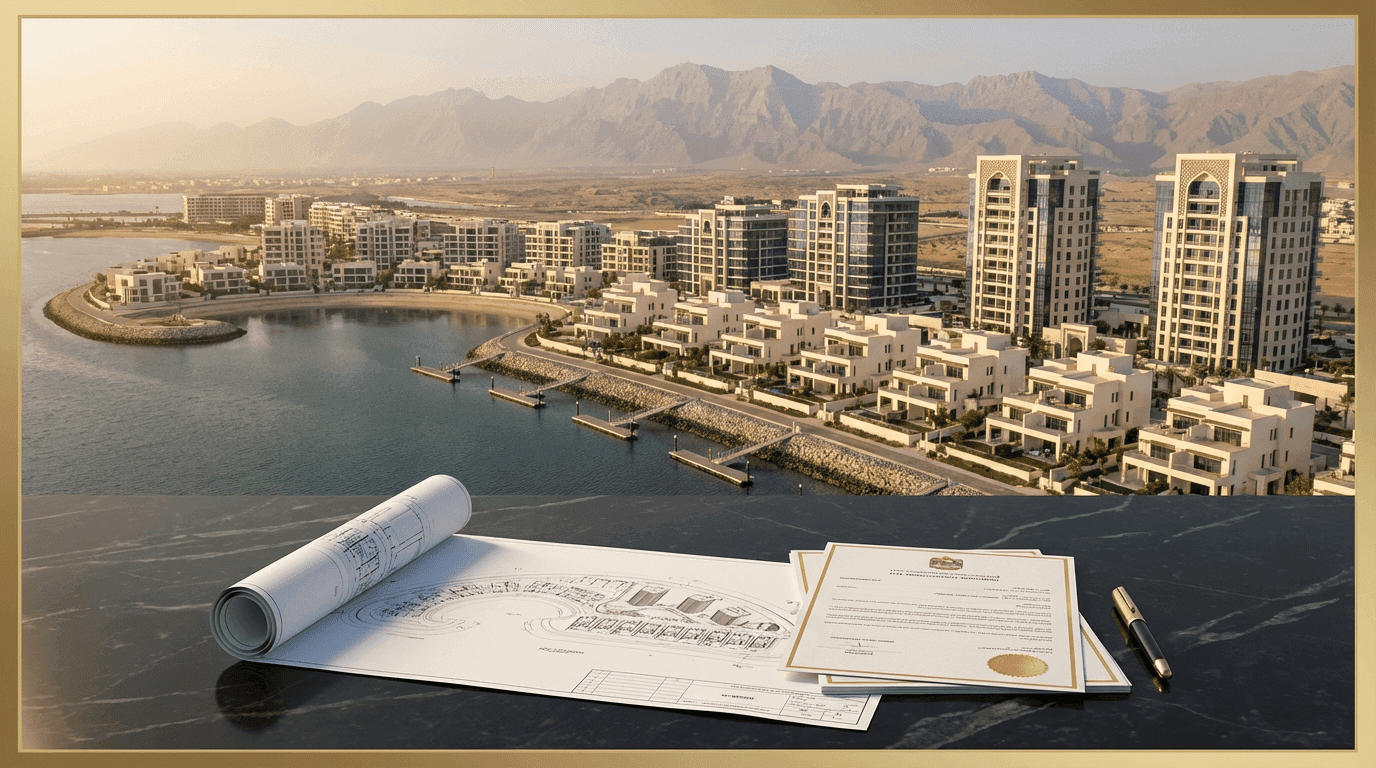
RAK Property Registration: Complete Guide to Fees, Process, and Timeline
Discover the complete RAK property registration process, including current fees, required documentation, and timelines for securing your Ras Al Khaimah investment.
Table Of Contents
- Understanding RAK Property Registration
- Current Registration Fees in RAK
- The Complete Registration Process
- Step 1: Pre-Registration Requirements
- Step 2: Documentation Preparation
- Step 3: RAK Land Department Submission
- Step 4: Payment and Fee Settlement](#step-4-payment-and-fee-settlement)
- Step 5: Title Deed Issuance
- Expected Timeline for Property Registration
- Special Considerations for Off-Plan Properties
- How Foreign Investors Navigate RAK Registration
- Why RAK Registration Offers Investment Advantages
- Common Registration Challenges and Solutions
Ras Al Khaimah has emerged as one of the UAE's most compelling property investment destinations, offering exceptional value and growth potential that sophisticated investors are increasingly recognising. Whilst the emirate's attractive pricing and strategic development initiatives draw considerable attention, understanding the property registration process remains essential for investors looking to secure their assets efficiently and compliantly.
The property registration process in RAK represents the final—and perhaps most critical—step in your investment journey. It's the mechanism through which ownership is legally transferred and recorded, providing you with the security of a registered title deed and the peace of mind that comes with proper documentation. For investors accustomed to more complex jurisdictions, RAK's registration system offers a refreshingly streamlined approach, though certain nuances require careful navigation.
This comprehensive guide examines the complete RAK property registration landscape, from the precise fee structures and documentation requirements to the realistic timelines you can expect. Whether you're securing a luxury waterfront apartment or an exclusive villa in one of RAK's premium developments, understanding these administrative essentials ensures your investment journey concludes smoothly and positions your asset for optimal future appreciation.
Understanding RAK Property Registration
Property registration in Ras Al Khaimah is administered by the RAK Land Department (also known as the Real Estate Registration Department), the emirate's official authority responsible for all real estate transactions, title deed issuance, and property ownership records. Unlike some international jurisdictions where registration can extend over months, RAK's system is designed for efficiency whilst maintaining rigorous standards of legal compliance.
The registration process serves multiple critical functions for property investors. Primarily, it provides legal proof of ownership through the issuance of a title deed, which represents the definitive document establishing your rights to the property. This title deed becomes essential for any future transactions, whether you're looking to sell, mortgage, or transfer the property. Additionally, registration ensures that ownership records are properly maintained in government databases, protecting against disputes and providing transparency in the real estate market.
For investors exploring exclusive RAK off-plan projects, understanding the registration timeline proves particularly valuable, as it affects both your financial planning and the point at which you can fully leverage your asset. The registration marks the transition from contract holder to registered owner—a distinction that carries significant legal and practical implications.
Current Registration Fees in RAK
Transfer Fee Structure
The primary cost associated with RAK property registration is the transfer fee, which is calculated as a percentage of the property's transaction value. As of current regulations, RAK maintains one of the most competitive fee structures in the UAE, with the standard transfer fee set at 2.25% of the property value. This fee is typically split equally between the buyer and seller, meaning purchasers generally pay 1.125% whilst sellers cover the remaining portion.
To illustrate the financial implications, consider these examples across different property values:
- AED 500,000 property: Total transfer fee of AED 11,250 (buyer pays AED 5,625)
- AED 1,000,000 property: Total transfer fee of AED 22,500 (buyer pays AED 11,250)
- AED 2,000,000 property: Total transfer fee of AED 45,000 (buyer pays AED 22,500)
- AED 3,500,000 property: Total transfer fee of AED 78,750 (buyer pays AED 39,375)
This fee structure represents considerable value compared to other UAE emirates, where transfer fees can reach 4% or higher. For investors pursuing RAK property investment opportunities with strong appreciation forecasts, these lower transaction costs enhance overall returns and reduce the capital required to complete acquisitions.
Additional Costs to Consider
Beyond the primary transfer fee, investors should budget for several ancillary costs that form part of the complete registration process:
Administrative fees typically range from AED 500 to AED 2,000, depending on the property type and specific services required. These cover the processing of documentation, verification procedures, and system entries that the Land Department conducts.
Trustee office fees apply when registration is conducted through approved typing centres or trustee offices, which handle the paperwork preparation and submission on your behalf. These services generally cost between AED 1,000 and AED 3,000, though they can expedite the process considerably and ensure documentation accuracy.
Mortgage registration fees become relevant if you're financing your purchase through a bank or financial institution. RAK charges approximately 0.25% of the mortgage value to register the lien against the property, with a typical minimum fee of around AED 2,000.
Developer service charges may apply for certain properties, particularly in master-planned communities where developers charge fees for transferring utilities and community registrations. These vary significantly by development but typically range from AED 5,000 to AED 15,000.
When calculating your total investment outlay, factoring in these additional expenses ensures you maintain sufficient liquidity for completion and avoid unexpected financial pressures at the registration stage.
The Complete Registration Process
Step 1: Pre-Registration Requirements
Before initiating the formal registration process, several prerequisites must be satisfied. For off-plan properties, you'll need confirmation that the developer has obtained a completion certificate from the relevant authorities, indicating the property meets all building standards and regulations. This certificate represents a critical milestone, as registration cannot proceed without it.
You'll also require proof of full payment to the developer, typically demonstrated through bank transfer receipts or a clearance letter from the developer confirming no outstanding amounts remain. Additionally, any applicable service charges or homeowners' association fees must be settled, as developers often require these payments before issuing their no-objection certificate (NOC) for registration.
For properties in freehold areas, verifying that the specific zone permits foreign ownership ensures you're legally entitled to register the property in your name. RAK has designated numerous freehold areas, but confirming this status at the outset prevents complications during registration.
Step 2: Documentation Preparation
The documentation phase requires meticulous attention to detail, as incomplete or incorrect paperwork represents the primary cause of registration delays. Essential documents include:
For individual buyers: A valid passport copy with UAE residence visa (if applicable), Emirates ID, the original sale and purchase agreement (SPA) signed by both parties, and the developer's completion certificate and NOC. If you're using financing, the bank's mortgage documentation and approval letter are also required.
For corporate buyers: All individual documents plus the company's trade licence, memorandum of association, board resolution authorising the purchase, and passport copies of authorised signatories.
All documents must be current, with many authorities requiring that certain documents be issued within three to six months of the registration date. Having these materials organised in advance significantly accelerates the subsequent stages.
Step 3: RAK Land Department Submission
Submission to the RAK Land Department can be conducted in person at their offices or through authorised trustees who specialise in property transactions. Many investors engaging with premium developments opt for trustee services, as these professionals navigate the system efficiently and handle the administrative details that can prove time-consuming for individuals unfamiliar with the process.
During submission, all parties (or their authorised representatives) must be present to sign the transfer documents in front of Land Department officials. This signing occurs after the documentation has been reviewed and approved, ensuring all information is accurate before the transfer becomes official.
The Land Department will verify the property details against their records, confirm the seller's ownership, and ensure no existing disputes or encumbrances affect the property. This verification process protects buyers by ensuring they're receiving clear title to the asset.
Step 4: Payment and Fee Settlement
Once documentation is approved, payment of all applicable fees must be completed before the registration is finalised. The RAK Land Department accepts payment through various methods, including bank transfers, certified cheques, and card payments at their offices.
Fee payment generates official receipts that become part of your permanent property records. Retaining copies of all payment documentation proves essential for future reference, tax purposes, and any subsequent property transactions.
In transactions involving mortgages, the bank typically handles payment of their portion of fees directly to the Land Department, coordinating with your completion to ensure all financial obligations are satisfied simultaneously.
Step 5: Title Deed Issuance
Following successful payment and final verification, the RAK Land Department issues the title deed in the buyer's name. This document represents the legal proof of ownership and contains essential information including the property description, exact location, size specifications, and registered owner details.
The title deed is issued in Arabic, with English translations available upon request. For investors planning to use the property as collateral for future financing or who may sell to international buyers, obtaining the English version at the time of issuance proves beneficial.
Modern title deeds in RAK include security features to prevent forgery and are recorded in electronic databases accessible to authorised parties. This dual physical-digital system provides robust protection for property owners whilst facilitating efficient future transactions.
Expected Timeline for Property Registration
Under optimal conditions with all documentation prepared correctly, the RAK property registration process typically completes within one to two weeks from initial submission to title deed issuance. This timeline assumes no complications arise and all parties are available for required signatures and appointments.
The process breaks down approximately as follows:
Days 1-3: Documentation review and verification by the Land Department. During this period, officials examine all submitted paperwork, verify the seller's ownership, and ensure the property has no existing encumbrances or disputes.
Days 4-7: Approval and scheduling of the final signing appointment. Once documentation is approved, parties are notified to attend the Land Department for the formal transfer signing. Scheduling depends on appointment availability, which can vary based on seasonal demand.
Days 8-10: Final signing, fee payment, and processing. All parties sign the transfer documents, fees are settled, and the Land Department processes the ownership change in their systems.
Days 11-14: Title deed preparation and issuance. The new title deed is generated, undergoes quality checks, and is released to the new owner.
However, several factors can extend this timeline. Incomplete documentation typically adds three to seven days whilst missing information is obtained and resubmitted. Complex transactions involving multiple parties, corporate structures, or international buyers may require additional verification, potentially adding one to two weeks. During peak periods—particularly the final quarters when many developments complete and off-plan projects reach handover—processing times can extend due to increased volume at the Land Department.
For investors concerned with timeline certainty, engaging experienced professionals who specialise in RAK transactions can mitigate delays and ensure the process proceeds as efficiently as possible.
Special Considerations for Off-Plan Properties
Off-plan property investments, which represent a significant portion of RAK's premium development opportunities, involve specific registration considerations that differ from ready properties. The registration timeline for off-plan purchases typically begins only after the developer receives their completion certificate from RAK Municipality and relevant authorities, which occurs after construction finishes and all necessary inspections are passed.
Developers of reputable projects generally initiate the registration process promptly after receiving completion certificates, often conducting bulk registrations for multiple units simultaneously. This approach can actually expedite individual registrations, as the developer's relationship with the Land Department and their established processes create efficiency.
Investors in exclusive RAK off-plan projects should maintain communication with their developers regarding completion timelines and registration schedules. Understanding when registration will occur allows for proper financial planning, as the balance payment and registration fees typically become due around the same period.
One advantage of off-plan investments in RAK is that many developers absorb certain fees or offer registration cost assistance as part of their sales incentives. Negotiating these terms during the initial purchase can reduce your final acquisition costs and enhance overall investment returns.
How Foreign Investors Navigate RAK Registration
Ras Al Khaimah has positioned itself as exceptionally welcoming to international investors, with straightforward processes that accommodate foreign ownership in designated freehold areas. Non-UAE nationals can register properties in their own names without requiring local sponsors or complex corporate structures, provided the property is located within approved freehold zones.
Foreign investors should ensure their passport remains valid throughout the registration process, with at least six months of validity recommended. Whilst UAE residency is not required to own property in RAK, having a residence visa can occasionally streamline certain administrative aspects of registration.
For investors residing outside the UAE at the time of registration, power of attorney arrangements can facilitate the process without requiring your physical presence. However, the power of attorney must be properly attested and legalised according to UAE requirements, which typically involves notarisation in your home country, attestation by the UAE embassy or consulate, and final approval by the UAE Ministry of Foreign Affairs.
Many international investors engaging with premium developments work with property specialists who coordinate the entire registration process on their behalf, providing updates remotely and ensuring all requirements are met without necessitating multiple trips to RAK.
Why RAK Registration Offers Investment Advantages
Beyond the administrative process itself, RAK's registration system provides several strategic advantages that enhance the investment proposition. The emirate's competitive fee structure—with transfer fees approximately 50% lower than Dubai—means investors retain more capital that can be deployed towards additional investments or property enhancements.
RAK's efficient registration timeline also facilitates faster asset turnover for investors pursuing trading strategies. The ability to complete registration within two weeks enables quicker realisation of capital gains compared to jurisdictions where registration extends over months, improving overall capital efficiency.
The emirate's transparent ownership records and secure registration system provide confidence to future buyers when you eventually sell, as verifying clean title and ownership history occurs quickly and reliably. This transparency supports property liquidity, an important consideration for investors focused on RAK property investment opportunities with strong appreciation forecasts.
Additionally, RAK's progressive approach to property regulations—including flexible payment plans, attractive developer incentives, and investor-friendly policies—creates an ecosystem where registration represents not a bureaucratic burden but a straightforward confirmation of your ownership rights.
Common Registration Challenges and Solutions
Despite RAK's efficient system, certain challenges occasionally arise during registration. Understanding these potential obstacles and their solutions helps investors navigate the process smoothly.
Incomplete developer documentation represents one of the most common issues, particularly with newer developers or recently completed projects. The solution involves maintaining proactive communication with your developer, requesting confirmation of completion certificate status well before your anticipated registration date, and escalating concerns through proper channels if delays occur.
Payment verification discrepancies sometimes arise when the Land Department's records don't match the developer's confirmation of full payment. Maintaining meticulous records of all payment transactions, including bank transfer receipts and developer acknowledgements, provides the documentation necessary to resolve these discrepancies quickly.
Mortgage coordination delays can occur when banks don't process their registration documentation in alignment with the buyer's timeline. Early coordination with your mortgage provider—ideally beginning several weeks before anticipated registration—ensures all parties are synchronised and prepared.
Name spelling variations between different documents occasionally cause confusion during registration. Ensuring absolute consistency in how your name appears across all documents (passport, Emirates ID, sale agreement, etc.) prevents this issue, with any necessary corrections made well before registration begins.
For investors working with established property specialists experienced in RAK transactions, many of these challenges are anticipated and prevented through proper planning and comprehensive documentation preparation from the outset.
Property registration in Ras Al Khaimah represents the culmination of your investment journey, transforming contractual rights into registered ownership and providing the legal foundation for your asset's future appreciation. The emirate's efficient registration system, competitive fee structure, and investor-friendly approach create a process that, whilst requiring attention to detail, proceeds smoothly when properly managed.
Understanding the complete registration landscape—from the 2.25% transfer fee and ancillary costs to the two-week timeline and documentation requirements—empowers you to plan effectively and ensure your investment completes without unexpected complications. For sophisticated investors pursuing RAK's exceptional growth opportunities, this administrative clarity complements the emirate's attractive fundamentals of competitive pricing, strategic development, and strong appreciation potential.
As RAK continues expanding its premium property offerings and attracting discerning investors who recognise the emirate's emerging potential, mastering the registration process becomes an essential component of successful property investment. With proper preparation, experienced guidance, and attention to the details outlined in this guide, your RAK property registration can proceed efficiently, securing your ownership and positioning your asset for the exceptional returns that characterise this dynamic market.
Secure Your RAK Investment with Expert Guidance
Navigating property registration is just one aspect of successful RAK investment. At Azimira Real Estate, we provide comprehensive support throughout your entire acquisition journey, from identifying exclusive off-plan opportunities to coordinating seamless registration and handover.
Our deep expertise in the RAK market and established relationships with premier developers ensure you receive privileged access to pre-launch projects and off-market opportunities that deliver exceptional capital growth potential. Whether you're exploring luxury waterfront apartments or exclusive villa communities, our tailored investment strategies are designed for discerning investors who demand both premium properties and professional service.
Contact our team today to discuss how we can help you secure high-yield RAK investment opportunities and navigate every aspect of property acquisition with confidence and clarity.
Related articles
What Counts as Good Real Estate Investments in 2026
Learn what makes good real estate investments in 2026, from net yield and demand signals to legal checks, exit plans and UAE opportunities.

Investors Needed for Real Estate? Start With This Plan
Investors needed for real estate? Use this practical plan to define strategy, numbers, due diligence and partners before raising capital.

Investment Marketing Tactics Developers Use at Launch
Understand investment marketing tactics developers use at launch, from scarcity to incentives, and learn how to assess UAE off-plan deals.