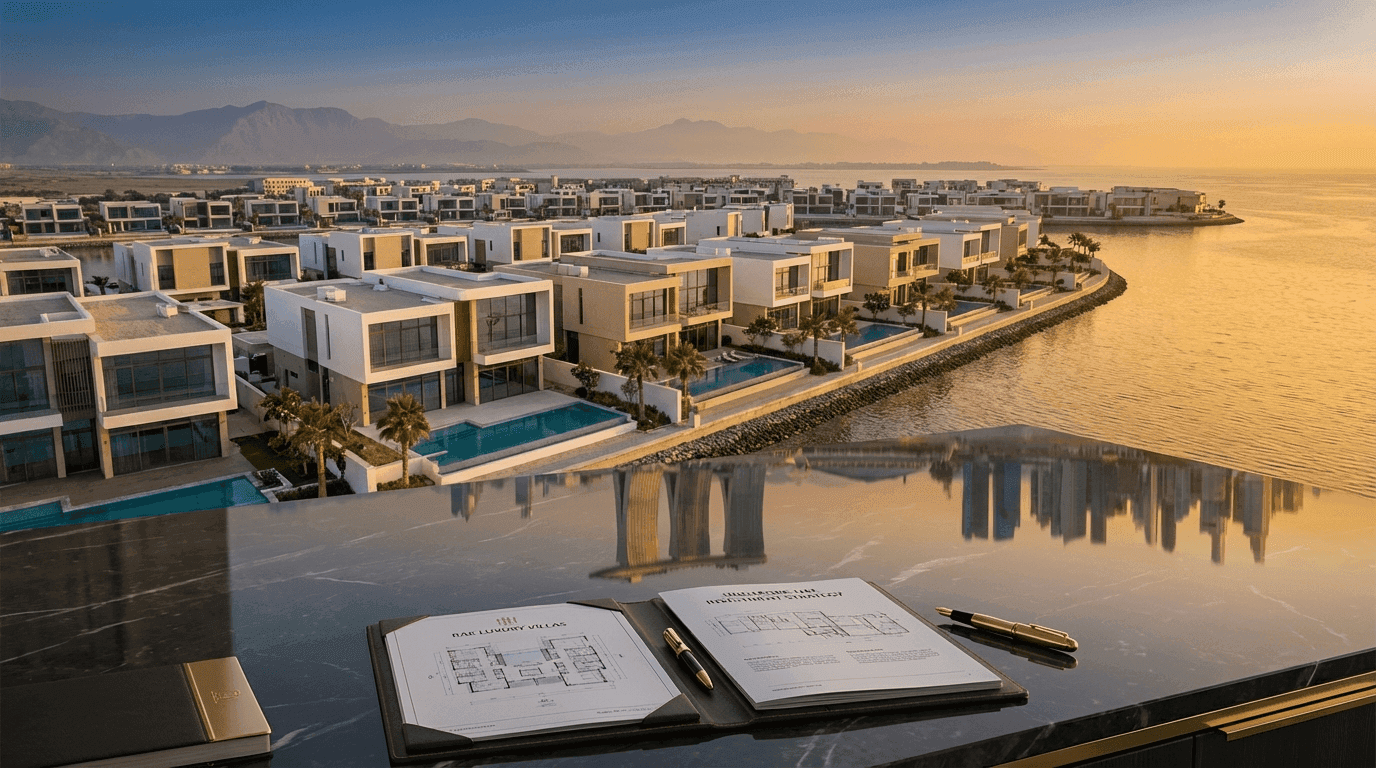
Singapore Family Offices and RAK Property: Strategic Diversification for Sophisticated Investors
Discover how Singapore family offices are leveraging Ras Al Khaimah property investments for portfolio diversification, capital preservation, and exceptional growth potential in the UAE market.
Table Of Contents
- Why Singapore Family Offices Are Looking Beyond Traditional Markets
- The Strategic Appeal of UAE Property for Family Offices
- RAK Property: The Emerging Diversification Opportunity
- Diversification Strategies: How Family Offices Approach RAK Investments
- Regulatory Advantages for Singapore-Based Investors
- Risk Management and Due Diligence Considerations
- The Off-Plan Advantage in RAK's Development Pipeline
- Building a Balanced UAE Property Portfolio
- Conclusion
Singapore's family offices, managing an estimated USD 2.4 trillion in assets as of 2024, are increasingly sophisticated in their approach to global diversification. Whilst traditional safe-haven assets and established markets continue to feature prominently in their portfolios, a notable shift towards emerging opportunity zones has gained momentum—particularly within the UAE property sector.
Ras Al Khaimah (RAK), the UAE's northernmost emirate, represents a compelling case study in strategic diversification for family offices seeking to balance capital preservation with exceptional growth potential. With property prices averaging 40-60% lower than Dubai yet delivering comparable rental yields of 6-8%, RAK offers a distinctive value proposition that aligns precisely with family office investment criteria: controlled risk exposure, strong fundamentals, and substantial appreciation forecasts.
This strategic approach to UAE property diversification extends beyond simple geographic spread. Family offices are employing nuanced allocation strategies that leverage RAK's emerging market dynamics alongside Dubai and Abu Dhabi's established ecosystems, creating resilient portfolios positioned to capture multiple growth trajectories within a single regulatory framework.
In this comprehensive analysis, we examine the investment thesis driving Singapore family offices towards RAK property, explore proven diversification frameworks, and identify the specific opportunities that sophisticated investors are prioritising in this rapidly evolving market.
Why Singapore Family Offices Are Looking Beyond Traditional Markets
The landscape for family office investment has transformed dramatically over the past decade. Singapore-based family offices, which numbered approximately 1,650 as of 2023 according to the Monetary Authority of Singapore, face unprecedented challenges in traditional asset classes. Bond yields remain historically compressed, equity valuations in developed markets trade at elevated multiples, and geopolitical uncertainties have introduced volatility that conflicts with the capital preservation mandates central to family office philosophy.
This environment has catalysed a fundamental reassessment of portfolio construction. Family offices are no longer content with conventional 60/40 equity-bond allocations; instead, they're embracing alternative assets that offer genuine diversification benefits. Real estate, particularly in strategically selected emerging markets, has moved from peripheral holdings to core allocations in many sophisticated portfolios.
The UAE property market addresses several key investment criteria simultaneously. The region offers political stability within an occasionally turbulent neighbourhood, a tax-efficient regulatory environment that preserves wealth across generations, and demographic fundamentals characterised by population growth and increasing purchasing power. For Singapore-based investors already familiar with pro-business governance and freehold ownership structures, the UAE presents recognisable institutional frameworks with superior growth dynamics.
Moreover, currency considerations enhance the appeal. Whilst the Singapore dollar appreciates against many currencies, the UAE dirham's peg to the US dollar provides predictable foreign exchange dynamics and natural portfolio hedging. Family offices managing multi-currency obligations find this stability particularly valuable when calculating long-term return projections and managing cross-border capital flows.
The Strategic Appeal of UAE Property for Family Offices
The UAE's real estate sector has matured considerably since the 2008-2009 correction, developing the institutional depth and regulatory sophistication that family offices require. Today's market bears little resemblance to the speculative environment of previous decades, having implemented comprehensive reforms including extended visa programmes, expanded freehold zones, and enhanced investor protections.
Family offices are drawn to several distinctive characteristics of UAE property investment:
Structural Tax Efficiency: The UAE maintains no capital gains tax, no property tax, and no inheritance tax—a framework that aligns perfectly with multi-generational wealth preservation strategies. For family offices managing succession planning alongside investment returns, this creates substantial advantages in after-tax performance.
Residency Pathways: The Golden Visa programme, offering 10-year residency for property investments meeting specified thresholds, provides optionality that extends beyond pure financial returns. Family offices value these flexibility mechanisms for principal family members and key personnel, particularly given Singapore's competitive regional positioning.
Institutional Infrastructure: The UAE's banking sector, legal frameworks, and property registration systems have achieved international standards. Title registration through systems like Dubai Land Department and RAK Land Department offers transparency and security comparable to established markets, reducing execution risk and enhancing liquidity.
Rental Market Fundamentals: Unlike many mature markets where rental yields have compressed to 2-3%, UAE properties consistently deliver 5-8% gross yields. This income component provides portfolio ballast whilst capital appreciation potential remains robust, creating attractive total return profiles.
These structural advantages explain why family offices have increased UAE allocations, but they don't fully account for the specific interest in Ras Al Khaimah—an emirate that offers distinctive opportunities within this already compelling framework.
RAK Property: The Emerging Diversification Opportunity
Ras Al Khaimah occupies a unique position within the UAE property ecosystem. Whilst Dubai commands global attention and Abu Dhabi represents institutional capital, RAK has quietly developed into what sophisticated investors recognise as a classic emerging opportunity: established infrastructure and governance combined with early-stage market pricing.
The emirate's transformation has been methodical rather than rushed. RAK has invested heavily in tourism infrastructure, educational institutions, and connectivity—the foundational elements that drive long-term property demand. Marjan Island, Al Hamra Village, and emerging developments along the coastline demonstrate master-planned execution comparable to premium Dubai communities, yet entry prices remain substantially lower.
For family offices, this price differential is analytically significant. Luxury apartments in RAK's premier waterfront developments trade at AED 1,200-1,800 per square foot, whilst comparable specifications in Dubai Marina or Palm Jumeirah command AED 2,500-3,500 per square foot. This valuation gap creates multiple strategic advantages:
Lower Capital Deployment: Family offices can achieve meaningful market exposure with smaller individual investments, facilitating portfolio construction and reducing concentration risk.
Enhanced Risk-Adjusted Returns: Lower entry prices combined with comparable rental yields (6-8% in RAK versus 5-7% in Dubai) produce superior cash-on-cash returns, improving portfolio efficiency metrics.
Appreciation Asymmetry: As RAK's market matures and the valuation gap narrows—a trajectory supported by infrastructure development and increasing buyer awareness—early investors capture disproportionate capital gains.
The emirate's development pipeline further supports this investment thesis. RAK has announced projects exceeding AED 30 billion, including the Wynn Resort (AED 3.9 billion), Hampton by Hilton developments, and extensive residential communities. This coordinated development creates network effects that enhance property values across the emirate, benefiting existing investors as new amenities and attractions increase destination appeal.
Government initiatives reinforce market fundamentals. RAK's Economic Zone has attracted over 14,000 companies, creating employment and housing demand beyond tourism. The emirate's education sector, including the American University of Ras Al Khaimah and multiple international schools, generates stable rental demand from academic professionals and expatriate families—tenant profiles that family offices value for their reliability and longevity.
Diversification Strategies: How Family Offices Approach RAK Investments
Sophisticated family offices rarely approach any single market with monolithic strategies. Instead, they employ diversified allocation frameworks that balance risk exposures whilst capturing multiple opportunity sets. Within RAK property specifically, several proven approaches have emerged:
Geographic Layering Within the UAE
Rather than concentrating capital in a single emirate, family offices construct UAE portfolios with deliberate geographic distribution. A representative allocation might comprise 50% in established Dubai locations for stability and liquidity, 30% in Abu Dhabi for government-sector rental demand, and 20% in RAK for growth and value. This structure provides defensive income streams alongside offensive appreciation potential.
The correlation dynamics between these markets enhance portfolio resilience. When Dubai experiences price acceleration that potentially signals overheating, RAK often maintains steadier growth trajectories. Conversely, when regional uncertainties affect tourism-dependent RAK demand, Dubai and Abu Dhabi's diversified economies provide portfolio stability.
Development Stage Diversification
Family offices balance ready properties delivering immediate rental income against off-plan investments offering superior capital appreciation. RAK's development pipeline presents exceptional off-plan opportunities, with pre-construction pricing often 20-30% below completed property values and flexible payment plans reducing upfront capital requirements.
Exclusive RAK Off-Plan Projects provide access to pre-launch opportunities that public markets never see, allowing family offices to secure optimal unit selection and advantageous pricing before general market awareness drives valuations higher.
A balanced approach might allocate 60% to completed, income-generating properties and 40% to off-plan developments. This structure ensures consistent cash flow whilst positioning the portfolio to capture appreciation as new projects reach completion and deliver superior amenities.
Property Type Segmentation
RAK offers diverse property typologies, each serving distinct portfolio functions. Luxury waterfront apartments in developments like Mina Al Arab deliver strong rental yields from tourism and executive housing demand. Villa communities such as Al Hamra Village attract family rentals with longer tenancy durations and lower turnover costs. Hotel apartments combine hospitality returns with residential appreciation potential.
Family offices construct property-type allocations based on specific objectives. Those prioritising income stability favour apartment concentrations, whilst those seeking capital preservation with moderate growth lean towards villa allocations. Blended strategies capture benefits across segments, reducing exposure to any single demand driver.
Currency and Holding Period Alignment
The dirham's US dollar peg influences family office structuring decisions. Those with dollar-denominated liabilities find natural hedging in UAE property investments, whilst Singapore dollar base-currency families assess exchange rate scenarios across projected holding periods.
Most family offices approach RAK investments with 7-10 year time horizons, allowing development cycles to complete and market maturation to progress. This patient capital approach aligns with RAK's trajectory and avoids the forced selling that undermines returns in any emerging market.
Regulatory Advantages for Singapore-Based Investors
Singapore family offices benefit from favourable bilateral frameworks that facilitate UAE property investment. The UAE-Singapore relationship encompasses comprehensive economic cooperation, including double taxation avoidance agreements that prevent wealth erosion through duplicate levies.
Freehold ownership rights available to international investors in designated RAK zones mirror Singapore's property frameworks, creating familiar legal contexts. Family offices can hold properties through Singaporean holding companies or establish UAE-based special purpose vehicles depending on specific estate planning and tax considerations—flexibility that institutional investors value highly.
The UAE's legal system, which combines civil law foundations with commercial court efficiency, provides dispute resolution mechanisms that sophisticated investors trust. Recent reforms including bankruptcy laws and commercial regulations have enhanced creditor protections and contractual enforceability, reducing legal risks that historically concerned international investors.
RAK specifically has streamlined property registration and title transfer processes through digital platforms that expedite transactions whilst maintaining rigorous due diligence standards. Family offices appreciate these efficiency improvements, which reduce execution timelines and associated carrying costs.
Visa and residency provisions deserve particular attention. Whilst property investment alone doesn't automatically confer residency in RAK, combined structures involving RAK Economic Zone company formation with property holdings can establish Golden Visa eligibility. Family offices exploring multi-jurisdictional residency strategies find these pathways valuable for diversifying personal tax domiciles and enhancing global mobility.
Risk Management and Due Diligence Considerations
Family offices distinguish themselves through rigorous risk assessment frameworks that extend well beyond cursory due diligence. When evaluating RAK property opportunities, sophisticated investors examine multiple risk dimensions:
Developer Creditworthiness and Track Record
RAK's market includes both established developers with completed project portfolios and newer entrants seeking market share. Family offices conduct comprehensive developer vetting, examining financial statements, completion histories, and quality standards. Established developers with government backing or substantial balance sheet strength receive preference, particularly for off-plan commitments where execution risk is highest.
Developer payment structures warrant careful analysis. Projects offering instalment plans linked to construction milestones align interests between investors and developers, whilst those demanding disproportionate upfront payments may signal capital adequacy concerns.
Master-Plan Integration and Infrastructure Connectivity
Individual properties don't exist in isolation—their long-term value depends on surrounding development quality and infrastructure connectivity. Family offices assess whether specific projects integrate into comprehensive master plans with committed infrastructure including roads, utilities, schools, and commercial amenities.
RAK's ongoing infrastructure investments, including airport expansion, highway improvements, and marina developments, enhance connectivity to Dubai and other emirates. Properties positioned to benefit from these improvements command premiums as accessibility increases and journey times decrease.
Legal Structure and Title Verification
Whilst UAE property law has achieved substantial sophistication, family offices engage specialised legal counsel to verify title clarity, review sale-purchase agreements, and structure holdings optimally. Particular attention focuses on whether properties sit within designated freehold zones, ensuring foreign ownership rights are unambiguous and enforceable.
Title searches through RAK Land Department confirm seller ownership and identify any encumbrances, liens, or disputes that might affect transfer. These verifications prevent the legal complications that occasionally afflict insufficiently diligent investors.
Market Liquidity and Exit Strategies
RAK's secondary market, whilst developing, doesn't yet match Dubai's liquidity. Family offices with potential liquidity needs structure investments accordingly, either accepting longer marketing periods or concentrating in RAK's most liquid segments such as premium waterfront apartments where buyer pools are deepest.
Alternatively, many family offices view RAK holdings as long-duration investments where exit timing flexibility exists, reducing liquidity constraints. For patient capital, RAK's current liquidity profile represents opportunity rather than limitation—less developed secondary markets often offer superior entry pricing precisely because liquidity-sensitive buyers avoid them.
The Off-Plan Advantage in RAK's Development Pipeline
RAK's substantial development pipeline creates distinctive opportunities for family offices willing to accept construction period risk in exchange for superior returns. Off-plan investment—purchasing properties before or during construction—has historically delivered the highest appreciation in emerging UAE markets.
The mechanics are straightforward but powerful. Developers price off-plan units below anticipated completion values to secure construction financing and reduce market risk. Buyers accepting delivery delays of 18-36 months access these discounted entry points, then capture appreciation as construction progresses and market awareness increases.
In RAK specifically, off-plan discounts typically range from 20-30% below comparable completed property prices. A luxury apartment that might command AED 1.5 million upon completion could be secured off-plan for AED 1.1-1.2 million, with payment structured across construction milestones.
Family offices employ several strategies to optimise off-plan investments:
Pre-Launch Access: The most substantial discounts occur at project launch or even pre-launch phases when developers gauge market interest. Investing in RAK Property: Unlocking Exceptional Returns and Growth through specialist advisers provides access to these opportunities before public marketing erodes pricing advantages.
Payment Plan Leverage: Many RAK developers offer payment plans requiring only 10-20% deposits with remaining amounts due across construction phases. This structure creates leverage without debt financing, allowing family offices to control larger asset values with smaller capital commitments.
Portfolio Scaling: Off-plan purchases enable family offices to build meaningful RAK allocations incrementally. Rather than deploying AED 10 million immediately into completed properties, the same capital might secure AED 15-20 million in off-plan assets through staged payments, amplifying eventual portfolio scale.
Development Selection: Not all off-plan opportunities offer equal risk-reward profiles. Family offices prioritise projects from established developers in proven locations with differentiated amenities. Master-planned communities with beach access, marina facilities, or integrated retail command premiums that justify slightly higher entry prices versus standalone buildings in secondary locations.
Risk management remains paramount in off-plan investment. Family offices mitigate construction and delivery risks through developer diversification—spreading off-plan commitments across multiple projects and developers rather than concentrating in single developments. This approach ensures that individual project delays or complications don't compromise overall portfolio performance.
Building a Balanced UAE Property Portfolio
Constructing an optimal UAE property portfolio that incorporates RAK requires systematic allocation across multiple dimensions. Family offices typically develop investment policy statements specifying target allocations, acceptable risk parameters, and rebalancing triggers.
A representative balanced portfolio for a family office making initial UAE property allocations might comprise:
40% Dubai Established Locations: Properties in mature communities like Dubai Marina, Downtown Dubai, or Jumeirah Beach Residence provide immediate rental income, high liquidity, and capital preservation. These serve as portfolio anchors, delivering stability whilst other allocations pursue growth.
25% RAK Completed Properties: Ready waterfront apartments or villas in established RAK developments generate current income whilst offering appreciation potential. These positions provide RAK market exposure without construction risk.
20% RAK Off-Plan Premium Projects: Carefully selected off-plan investments in RAK's highest-quality upcoming developments capture maximum appreciation potential. Focusing exclusively on premium segments reduces execution risk whilst maintaining upside exposure.
15% Abu Dhabi: Properties serving government-sector tenants or positioned near major employers provide portfolio diversification beyond tourism-dependent emirates. Abu Dhabi's lower volatility complements RAK's higher growth trajectory.
This allocation framework balances income, growth, liquidity, and risk across geographic and development-stage dimensions. As portfolios mature and RAK positions appreciate, family offices rebalance by redirecting new capital or harvesting gains from outperforming segments.
Ongoing portfolio management includes annual property valuations, rental market assessments, and strategic reviews that identify emerging opportunities or deteriorating fundamentals requiring position adjustments. The most sophisticated family offices engage local property specialists who provide market intelligence, transaction execution, and ongoing asset management—services that prove invaluable when managing assets across multiple jurisdictions.
Conclusion
Singapore family offices are discovering that strategic diversification extends beyond traditional asset class allocation into intelligent geographic and development-stage selection within high-potential sectors. RAK property represents a compelling component of UAE real estate portfolios, offering the asymmetric risk-reward profiles that sophisticated investors seek: controlled downside through established governance and infrastructure, with substantial upside through early-stage market positioning.
The emirate's transformation from tourism destination to comprehensive residential and business ecosystem creates multiple appreciation drivers that reinforce rather than compete with one another. As employment grows, residential demand strengthens; as residential communities mature, retail and hospitality opportunities expand; as amenities multiply, the entire market re-rates upward.
For family offices, the opportunity extends beyond pure financial returns. RAK investments provide portfolio diversification that reduces correlation with traditional assets, access to an emerging market before institutional capital arrives en masse, and positioning within the UAE's regulatory and tax framework that facilitates multi-generational wealth preservation.
The family offices achieving optimal outcomes combine analytical rigour with strategic patience—conducting comprehensive due diligence, structuring positions across development stages and property types, and maintaining investment discipline through market cycles. Those who master this approach are building UAE property portfolios that deliver sustained value creation for decades to come.
Partner With RAK Property Specialists
Azimira Real Estate provides Singapore family offices with exclusive access to RAK's most compelling investment opportunities. Our deep market expertise, curated portfolio of premium developments, and comprehensive advisory services ensure your UAE property diversification strategy achieves optimal outcomes.
From pre-launch off-plan projects to luxury completed properties, we deliver the market intelligence and transaction execution that sophisticated investors require. Contact our team to discuss your family office's RAK property strategy and discover opportunities not available through conventional channels.
Related articles
What Counts as Good Real Estate Investments in 2026
Learn what makes good real estate investments in 2026, from net yield and demand signals to legal checks, exit plans and UAE opportunities.

Investors Needed for Real Estate? Start With This Plan
Investors needed for real estate? Use this practical plan to define strategy, numbers, due diligence and partners before raising capital.

Investment Marketing Tactics Developers Use at Launch
Understand investment marketing tactics developers use at launch, from scarcity to incentives, and learn how to assess UAE off-plan deals.