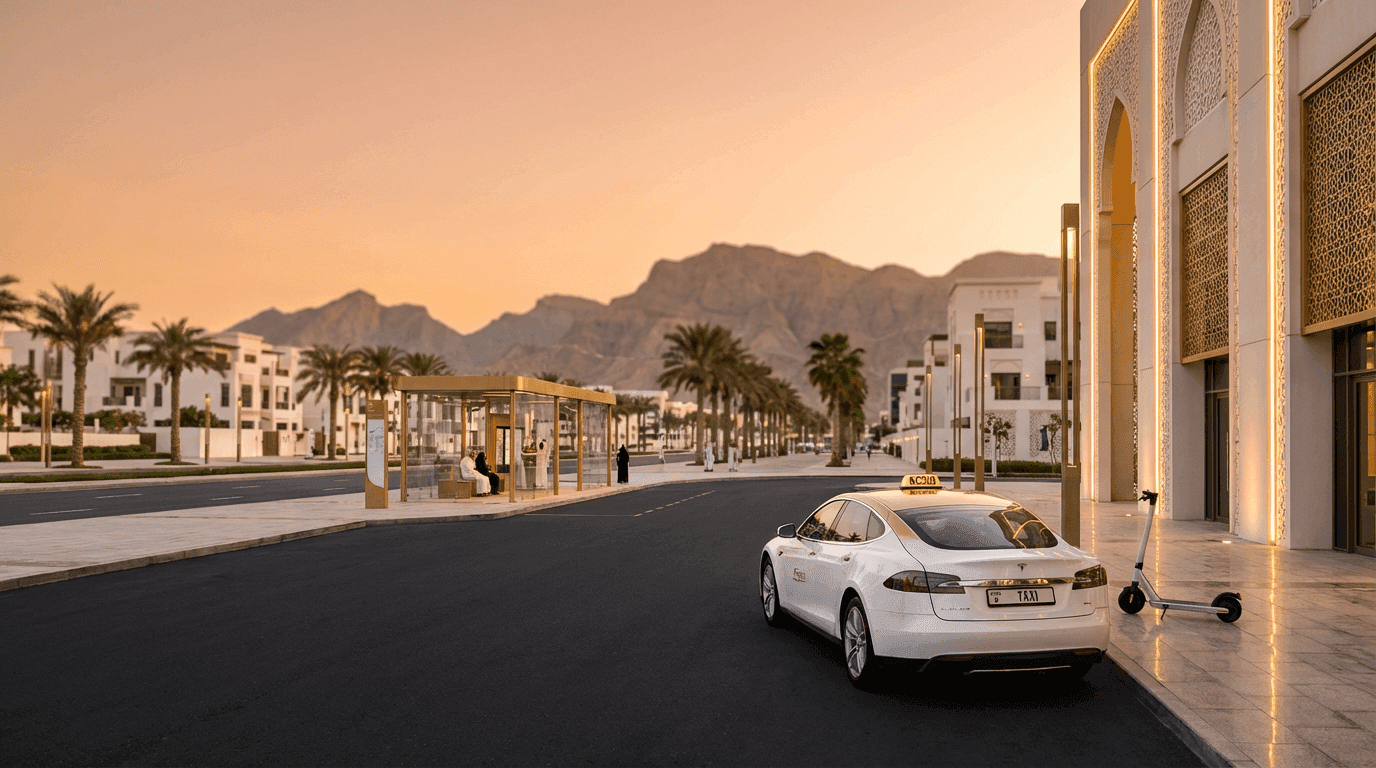
4 Ways to Get Around RAK Without a Car: Your Complete Transport Guide
Discover how to navigate Ras Al Khaimah without a car. From taxis to e-scooters, explore RAK's transport options with costs, tips, and local insights.
Table Of Contents
- Why RAK is Perfectly Navigable Without a Car
- 1. Taxis: The Most Convenient Option
- 2. Ride-Hailing Apps: Modern Mobility
- 3. Public Buses: The Budget-Friendly Choice
- 4. E-Scooters and Bicycles: Eco-Friendly Exploration
- Getting to RAK from Dubai and Other Emirates
- Transport Tips for Property Investors and Residents
Ras Al Khaimah has emerged as one of the UAE's most appealing destinations, combining natural beauty, cultural heritage, and impressive infrastructure development. As the emirate continues to attract investors, tourists, and new residents alike, understanding how to navigate RAK without the commitment of owning or renting a vehicle becomes increasingly valuable. Whether you're visiting to explore potential property investments, enjoying a weekend getaway, or considering RAK as your new home, efficient transportation options can significantly enhance your experience.
Contrary to common assumptions about the UAE, getting around RAK without a car is not only possible but often preferable, particularly for short stays or those residing in well-connected communities. The emirate's compact layout, growing infrastructure, and variety of transport options make car-free living surprisingly convenient. From traditional taxis to modern e-scooters, RAK offers diverse mobility solutions that cater to different budgets, preferences, and journey types. This guide explores four practical ways to navigate the emirate, complete with costs, tips, and insider knowledge to help you move around RAK with confidence and ease.
Why RAK is Perfectly Navigable Without a Car
Ras Al Khaimah's geographical layout makes it particularly suited to car-free exploration. Unlike sprawling Dubai or Abu Dhabi, RAK's main attractions, residential areas, and commercial districts are concentrated within relatively accessible zones. The emirate stretches approximately 64 kilometres along the Arabian Gulf coast, but most visitor destinations and residential communities cluster around Al Nakheel, Al Hamra, and the central areas near RAK City. This concentration means shorter journey distances and more economical transport costs compared to navigating larger emirates.
The emirate's ongoing infrastructure development has prioritised accessibility and connectivity. Recent years have witnessed significant improvements in road networks, public transport facilities, and pedestrian-friendly spaces, particularly around new luxury waterfront developments and commercial centres. For property investors evaluating RAK's lifestyle potential, understanding these transport options provides valuable insight into the daily living experience residents and tenants can expect. Moreover, RAK's lower traffic congestion compared to Dubai means taxis and ride-hailing services often provide faster, stress-free journeys than self-driving in busier emirates.
1. Taxis: The Most Convenient Option
RAK Transport Authority taxis represent the most straightforward and widely available transport option throughout the emirate. Distinguished by their beige and brown colour scheme, these official taxis operate 24/7 and can be hailed from the street, booked via telephone, or found at designated taxi ranks near hotels, shopping centres, and tourist attractions. The fleet maintains high standards of cleanliness and safety, with all drivers required to meet strict licensing requirements and knowledge tests.
Taxi fares in RAK follow a regulated structure that makes budgeting straightforward. The standard flagfall begins at AED 3 during daytime hours (06:00-22:00), with a per-kilometre rate of approximately AED 1.75. Evening and night-time journeys (22:00-06:00) attract a slightly higher flagfall of AED 3.50, whilst the per-kilometre rate remains consistent. A typical journey from Al Hamra Village to RAK Mall, covering approximately 15 kilometres, costs around AED 30-35, making taxis considerably more affordable than in Dubai or Abu Dhabi. For airport transfers, expect to pay AED 50-70 from central RAK to Ras Al Khaimah International Airport, depending on your exact pickup location.
One significant advantage of RAK taxis is their flexibility for multi-stop journeys and waiting time. Drivers generally accommodate reasonable requests to wait whilst you complete brief errands, with waiting charges applied at approximately AED 30 per hour. This proves particularly useful for property viewings, allowing investors to visit multiple off-plan developments efficiently. For regular users, the RAK Transport Authority also offers taxi booking via their call centre (+971 7 228 8700), which guarantees pickup within 10-15 minutes in most populated areas.
Practical tips for using RAK taxis:
- Always ensure the meter is running from the start of your journey
- Carry small denominations of cash, as some drivers have limited change
- Major credit and debit cards are accepted in most vehicles, but cash remains more reliable
- Save the RAK taxi booking number in your phone for guaranteed pickups
- For regular journeys, note the driver's details if you receive excellent service - you can request them specifically for future bookings
2. Ride-Hailing Apps: Modern Mobility
Digital ride-hailing services have transformed urban mobility across the UAE, and RAK is no exception. Uber operates throughout the emirate, providing a convenient alternative to traditional taxis with transparent pricing, cashless payments, and driver ratings. The service proves particularly valuable for visitors unfamiliar with local geography, as the app eliminates language barriers and ensures you're quoted the fare upfront before confirming your journey. Coverage extends across all major areas including Al Hamra, Mina Al Arab, Al Marjan Island, and central RAK City.
Pricing through ride-hailing apps in RAK remains competitive with traditional taxis, though dynamic pricing during peak hours can increase costs. A standard UberX journey from Al Hamra to RAK Old Town typically costs AED 25-30, whilst longer trips to Jebel Jais or more remote areas may reach AED 80-100. The app's fare estimate feature allows you to compare options before booking, and scheduled rides enable advance planning for airport transfers or important appointments. For those exploring property investment opportunities across RAK's emerging communities, ride-hailing apps provide reliable transport to off-plan project locations that may not yet appear on traditional taxi drivers' mental maps.
Availability represents the primary consideration when using ride-hailing services in RAK. Whilst coverage has improved significantly, the number of available drivers remains lower than in Dubai, particularly during early morning hours (05:00-07:00) and late evenings after 23:00. Weekend mornings and public holidays may also see reduced availability. Savvy users learn to build in extra time for driver allocation, particularly when travelling from residential communities on the emirate's outskirts. The Uber app's scheduling feature, which allows bookings up to 30 days in advance, mitigates this concern for time-sensitive journeys.
Maximising your ride-hailing experience in RAK:
- Download the app and set up your payment method before arriving in RAK
- Enable location services for accurate pickup points
- Use the 'Schedule Ride' feature for early morning airport transfers
- Add saved locations for frequently visited addresses, including your accommodation or property viewings
- Check estimated wait times before committing to an app booking - sometimes a street-hailed taxi proves faster
3. Public Buses: The Budget-Friendly Choice
The RAK Public Transport system offers an economical alternative for navigating the emirate, particularly suited to those on extended stays or residents managing daily commuting costs. Operated by the RAK Transport Authority, the bus network connects major residential areas, commercial districts, educational institutions, and key attractions through multiple routes. Whilst less extensive than Dubai's RTA network, RAK's bus system covers essential corridors and continues to expand alongside the emirate's residential development.
Fares represent the most compelling advantage of public buses, with single journey tickets costing just AED 2-5 depending on distance travelled. A rechargeable smart card system simplifies payment and offers slight discounts for regular users, with cards available for purchase at major bus stations and select retail outlets. For those residing in RAK long-term - including property investors who choose to occupy rather than let their purchases - monthly passes offer unlimited travel for approximately AED 150-200, delivering substantial savings compared to daily taxi use.
Key routes connect Al Nakheel to RAK City Centre, extend to Al Hamra and coastal communities, and service the industrial areas where many emirate workers are employed. Route E307 provides inter-emirate connectivity, linking RAK with Sharjah and offering budget-conscious transport to Dubai for approximately AED 25. However, frequency remains a consideration, with most routes operating at 30-60 minute intervals rather than the 10-15 minute frequencies common on Dubai's busiest corridors. Journey planning requires more preparation, and schedules reduce significantly after 22:00, with some routes ceasing operation entirely.
Making public buses work for you:
- Download the RAK Transport Authority app or visit their website for route maps and timetables
- Purchase a smart card if staying longer than a few days to avoid queuing for tickets
- Plan journeys with buffer time, as buses occasionally run slightly behind schedule
- Buses are air-conditioned but can become crowded during peak commuting hours (07:00-09:00 and 17:00-19:00)
- Consider buses for regular routes like accommodation to shopping centres, then use taxis for specific destinations
4. E-Scooters and Bicycles: Eco-Friendly Exploration
RAK's investment in sustainable transport infrastructure has created opportunities for micro-mobility solutions including electric scooters and bicycle schemes. Several operators now provide dockless e-scooter rentals through smartphone apps, with scooters positioned throughout high-traffic areas including Al Hamra Village, waterfront promenades, and near major hotels. These emission-free alternatives suit short journeys, leisurely exploration, and connecting between nearby destinations without waiting for taxis or adhering to bus schedules.
E-scooter costs typically follow a structure of AED 3-5 to unlock the vehicle, then AED 0.50-1.00 per minute of use. A 15-minute scooter journey along the Al Hamra waterfront might cost AED 10-15 total, combining exercise, fresh air, and efficient transport. Maximum speeds are electronically limited to 20-25 kilometres per hour, and designated parking zones ensure scooters don't obstruct pedestrian areas. For property investors exploring lifestyle amenities around potential purchases, e-scooters offer an engaging way to experience neighbourhoods from a resident's perspective rather than through a car window.
Cycling infrastructure in RAK continues developing, with dedicated paths along coastal areas and within master-planned communities. Al Hamra Village, Mina Al Arab, and several exclusive villa communities feature internal cycling routes that connect residential clusters with amenities, beaches, and recreational facilities. Some hotels and resorts offer complimentary bicycle loans to guests, whilst emerging rental shops cater to both residents and visitors. The cooler months from November through March provide ideal cycling conditions, with comfortable temperatures making pedal-powered transport genuinely pleasant.
Safe and effective micro-mobility usage:
- Always wear a helmet (some e-scooter operators provide them, or bring your own)
- Stick to designated cycling paths and shared pedestrian zones rather than main roads
- Download multiple e-scooter apps to compare availability and pricing
- Avoid using e-scooters during summer midday heat (June-August, 11:00-16:00)
- Respect parking zones to avoid fines and ensure scooters remain available for others
- Check battery levels before starting longer journeys to avoid being stranded
Getting to RAK from Dubai and Other Emirates
Inter-emirate connectivity makes RAK accessible even for those without personal vehicles. The E311 highway provides the primary road connection from Dubai and Sharjah, with multiple transport options serving this route. Public buses including routes E307 and E400 link RAK with Sharjah's Al Jubail station, where connections to Dubai's extensive metro and bus network are available. Journey times average 90-120 minutes depending on traffic conditions, with fares remaining under AED 30 for the full journey.
Premium options include inter-emirate taxi services and private car hire with driver. Dubai-based taxis can transport passengers to RAK, though costs typically reach AED 250-350 for the approximately 110-kilometre journey. Return arrangements require coordination, as Dubai taxis cannot wait indefinitely or pick up passengers in RAK without returning empty. Private car services offer more flexibility, with full-day hire including driver costing AED 500-800, ideal for property investors planning multiple viewings across both emirates.
For frequent travellers between Dubai and RAK, some property developments now offer resident shuttle services, particularly luxury communities targeting Dubai-based buyers seeking weekend retreats or investment properties in RAK's higher-yield market. These amenities add significant value for those maintaining primary residences in Dubai whilst capitalising on RAK's attractive property prices and rental returns.
Transport Tips for Property Investors and Residents
For those considering property investment in RAK, transport accessibility directly impacts both personal convenience and rental appeal. Developments within walking distance of taxi ranks, bus routes, or near major roads commanding good ride-hailing coverage deliver stronger rental demand, particularly from tenants without personal vehicles. When evaluating off-plan projects, assess proximity to transport links alongside amenities - a property requiring 20-minute walks to reach main roads faces marketing challenges regardless of internal quality.
Luxury developments including those around Al Marjan Island and Al Hamra increasingly provide internal shuttle services, connecting residents with nearby shopping centres, beaches, and dining precincts. These amenities reduce transport costs for residents whilst enhancing community appeal, supporting capital appreciation for investor-owners. Some master-planned communities also incorporate dedicated taxi services with preferential rates for residents, adding tangible value beyond the property itself.
The emirate's ongoing infrastructure development suggests transport connectivity will continue improving. Announced expansions to the public bus network, additional e-scooter operators, and potential future light rail connections all point toward enhanced mobility options. Forward-thinking investors recognise that today's developing areas often become tomorrow's well-connected communities, with transport infrastructure following residential growth. Properties positioned along planned transport corridors or within emerging communities frequently deliver exceptional appreciation as accessibility improves.
Investment considerations regarding transport:
- Prioritise properties within 5-10 minutes' walk of main roads or transport hubs
- Research planned infrastructure developments near potential purchases
- Consider developments offering resident transport services as value-adds
- Properties near Ras Al Khaimah International Airport attract business traveller tenants
- Communities with internal cycling infrastructure appeal to health-conscious renters
- Transport accessibility becomes increasingly important as RAK attracts more car-free residents
Navigating Ras Al Khaimah without a car proves not only feasible but often advantageous, whether you're visiting for property research, enjoying a holiday, or residing in one of the emirate's emerging communities. From affordable taxis and convenient ride-hailing apps to budget-friendly public buses and eco-conscious e-scooters, RAK offers diverse transport solutions suited to different needs, budgets, and journey types. The emirate's compact layout, improving infrastructure, and lower costs compared to Dubai or Abu Dhabi create an environment where car-free living delivers genuine convenience rather than compromise.
For property investors evaluating RAK's lifestyle offerings, these transport options demonstrate the emirate's growing maturity and resident-focused development approach. As infrastructure continues expanding alongside residential growth, accessibility will only improve, supporting both property values and rental appeal. Understanding how to navigate RAK efficiently provides practical benefit for your current visit whilst offering valuable insight into the daily experience your future tenants or you yourself might enjoy. Whether exploring potential investments or simply discovering this captivating emirate, the journey around RAK can be as rewarding as the destinations themselves.
Ready to Explore RAK's Premium Property Opportunities?
Whilst discovering how easily you can navigate Ras Al Khaimah, why not explore the exceptional investment opportunities this emerging emirate offers? Azimira Real Estate specialises in exclusive off-plan projects and luxury properties throughout RAK, providing access to pre-launch developments with outstanding growth potential. Our expert team offers tailored investment strategies, comprehensive market insights, and unparalleled service throughout your property acquisition journey.
Contact our specialists today to discuss how RAK's combination of accessibility, lifestyle appeal, and exceptional returns could enhance your property portfolio.
Related articles
What Counts as Good Real Estate Investments in 2026
Learn what makes good real estate investments in 2026, from net yield and demand signals to legal checks, exit plans and UAE opportunities.

Investors Needed for Real Estate? Start With This Plan
Investors needed for real estate? Use this practical plan to define strategy, numbers, due diligence and partners before raising capital.

Investment Marketing Tactics Developers Use at Launch
Understand investment marketing tactics developers use at launch, from scarcity to incentives, and learn how to assess UAE off-plan deals.