
First Time Investment Property: 9 Checks Before You Buy
Buying a first time investment property? Use these 9 checks to validate budget, developer, costs, rental demand and exit plan before you buy in the UAE.
Buying your first time investment property is exciting, but it is also the point where most investors lock in mistakes that take years to unwind. The reason is simple: you are making a long-term decision with short-term information, marketing materials, and often a ticking “launch price” clock.
This checklist is designed for first-time buyers who want a clear, repeatable due diligence process before committing to any property (ready or off-plan), especially in fast-moving UAE markets.
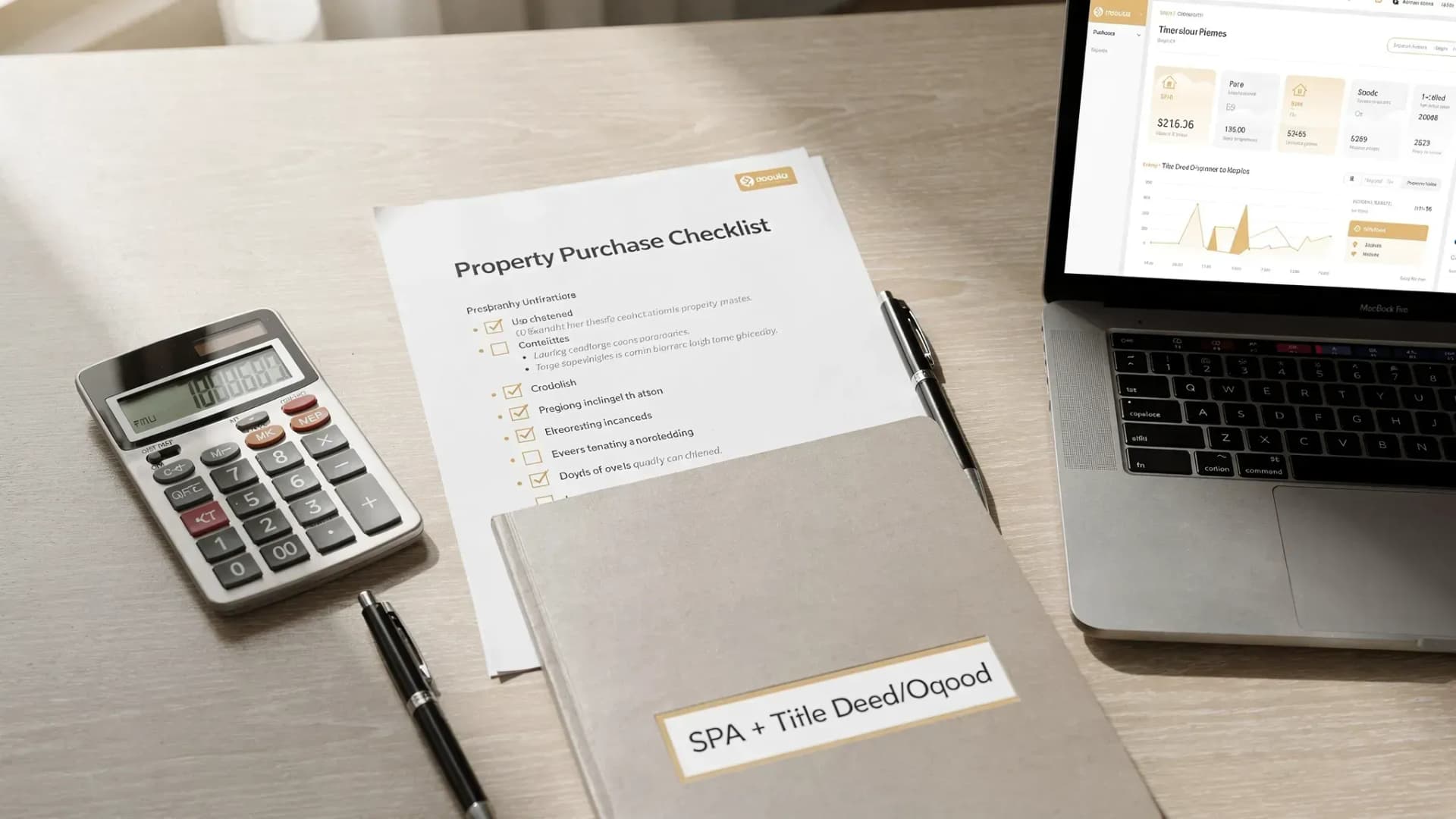
The 9 checks at a glance
| Check | What you are validating | Why it matters for a first purchase |
|---|---|---|
| 1 | Your goal and time horizon | Stops you buying a “great unit” that is wrong for your plan |
| 2 | Realistic returns (net, not gross) | Prevents yield illusions and cash-flow surprises |
| 3 | Financing and currency resilience | Avoids forced selling due to rate or FX shocks |
| 4 | Ownership rules and where foreigners can buy | Ensures you can legally own, register, and resell |
| 5 | Developer quality and escrow protections | Reduces delivery, quality, and delay risk (off-plan) |
| 6 | Contract and documents you will be bound by | Turns brochure promises into enforceable terms |
| 7 | Total cost of ownership | Protects your real ROI, not the headline ROI |
| 8 | Rental demand depth and regulations | Ensures liquidity in the rental market, not just “interest” |
| 9 | Exit strategy and liquidity | Defines how you get paid, and when you can change course |
1) Define “investment” in one sentence (goal, hold period, outcome)
Before you review locations, developers, or floor plans, write one sentence:
“I am buying this property to achieve X, within Y years, with Z level of risk.”
Examples:
- “I want a 5 to 7-year capital growth play, I can tolerate construction timelines, and I do not need the rent to cover all costs in year one.”
- “I want stable cash flow within 3 months of completion, I want lower volatility, and I prefer an established community with proven tenant demand.”
This matters because first-time buyers often mix incompatible goals (for example, expecting prime capital growth, immediate high net yield, and zero risk, all at once). Your “one sentence” becomes the filter for every other check.
2) Model returns conservatively (net yield, vacancy, and real expenses)
Marketing materials typically quote gross yields (rent divided by purchase price). That is not what you keep.
A simple first-pass net model should include:
- Expected rent range (base case and conservative case)
- Vacancy assumption (even in strong markets)
- Service charges (common in UAE communities)
- Maintenance and sinking fund (especially for coastal and high-usage units)
- Letting and management fees (if you are not on the ground)
- Insurance and utilities during vacancy
If you want a quick starting point, Azimira has a practical primer on the underlying math in the 2-minute ROI calculation guide. The key is not complex spreadsheets, it is refusing to rely on headline numbers.
3) Stress-test financing and currency (even if you plan to pay cash)
For many first-time investors, the risk is not the property, it is the funding plan.
If you are using a mortgage
Treat financing as a precondition, not an afterthought.
- Get mortgage pre-approval early so you understand loan-to-value, bank fees, and documentation requirements.
- Stress-test repayments at higher rates than today, and check whether your rent still covers the monthly outflow.
A useful step-by-step reference is Azimira’s mortgage pre-approval guide.
If you are moving money internationally
Off-plan purchases are often staged over months or years. That means you are exposed to FX movements across the payment schedule.
- Decide whether you will convert upfront, stagger conversions, or hedge.
- For larger staged commitments, learn the basics of hedging tools such as forwards (they are not for everyone, but they solve a real problem).
Azimira outlines the concept clearly in FX forward contracts for UAE property investment.
4) Confirm you can legally own the asset you are buying (and where)
In the UAE, foreign ownership rules depend on the emirate and the specific area (freehold vs other arrangements). The “project name” is not enough. You need clarity on the designated ownership status.
For first-time investors, this check has three parts:
- Area eligibility: Is the property in a zone where you, as a non-national (and potentially a non-resident), can own?
- Your ownership type: Freehold, leasehold, usufruct, or other rights (each affects resale and inheritance planning).
- Registration mechanism: For off-plan, you typically rely on an interim registration system (commonly referred to as Oqood in many UAE contexts). For completed property, it is the title deed.
If you are considering Ras Al Khaimah specifically, start with Azimira’s map of RAK freehold areas and their broader overview of foreign ownership in RAK.
For regulatory context, you can also review consumer guidance from official channels such as the UAE Government portal at u.ae.
5) Vet the developer like a lender would (track record, delivery, escrow discipline)
If your first time investment property is off-plan, the developer is part of the asset. You are underwriting an operating company’s ability to deliver.
Practical due diligence signals include:
- Track record: delivered projects, not just launches
- Delivery discipline: history of delays, handover quality, post-handover defect resolution
- Financial and operational strength: evidence of sustained delivery across cycles
- Escrow structure and payment channels: you should understand where your money goes and what triggers releases
Azimira provides two strong frameworks you can use:
- A developer evaluation template in the Tier-1 developer KPI scorecard
- A deeper, investor-focused checklist in escrow account due diligence for off-plan
If you are buying in Dubai, the Dubai Land Department also maintains consumer-facing resources; start at the official Dubai Land Department site.
6) Treat the contract as the product (SPA clauses, variation rights, handover rules)
Brochures sell outcomes. Contracts define remedies.
Before you pay a reservation fee or sign a Sale and Purchase Agreement (SPA), confirm:
- What exactly is included: unit type, size basis, parking, storage, view wording (if any), and finish schedule
- Variation rights: what the developer can change without your consent (materials, layout, amenities)
- Payment plan triggers: are instalments linked to construction milestones or calendar dates?
- Delay provisions: what happens if handover slips, and what evidence is required?
- Assignment and resale rules (off-plan): can you sell before handover, and what fees apply?
Document discipline is a first-time investor advantage because it is one of the few parts of the deal you fully control.
If you want a baseline document list to compare against, use Azimira’s 8 essential documents before signing a RAK property deal. Even if you are buying outside RAK, the logic of the checklist remains useful.
7) Calculate your true all-in cost (entry costs plus annual ownership costs)
First-time investors commonly budget for the deposit and miss the ownership reality.
Your all-in cost typically includes:
- Registration and administration fees (varies by emirate)
- Agent commission (where applicable)
- Mortgage registration and bank fees (if financing)
- Snagging and handover costs (especially for premium finishes)
- Ongoing service charges, maintenance, and utilities
- Insurance and compliance costs (particularly relevant for short-term lets)
If you are evaluating Ras Al Khaimah, note that fees and processes are specific. For example, Azimira’s RAK Land Department guide details the local registration fee structure and workflow, starting with RAK Land Department services and fees.
To avoid underestimating ongoing spend, pair that with:
Even if you are not buying in RAK, the categories (service charges, maintenance, insurance, vacancy costs) translate to any market.
8) Validate rental demand with evidence (tenant profile, strategy fit, regulations)
A rental strategy is not “rent it out”. It is choosing:
- Long-let (annual lease)
- Short-term rental (holiday lets)
- Hybrid or seasonal use
Each has different:
- Demand drivers
- Operational complexity
- Regulatory requirements
- Net yield after fees and turnover
For first-time investors, the most common misstep is assuming the highest headline revenue model is the best investment model. Often, it is simply the model with the highest workload and volatility.
If you are investing in Ras Al Khaimah, use market-specific analysis rather than general UAE averages. Two helpful starting points:
- RAK rental demand forecast (tourism vs resident market)
- STR vs long-let ROI calculator (how to compare returns)
Your goal is to answer one question clearly: Who is the likely tenant, and why would they choose my unit over the alternatives?
9) Build an exit plan before you enter (liquidity, holding period, and triggers)
An investment property is only “good” if you can sell, refinance, or keep it with confidence.
For a first time investment property, define:
- Minimum hold period required to overcome entry and exit costs
- Your target exit routes (resale, refinancing, assignment sale for off-plan where permitted, or long-term hold)
- Triggers that would make you sell or hold (rate changes, personal liquidity needs, market cycle signals)
If you are investing in RAK, Azimira has a practical planning guide on how long to hold RAK property for maximum returns. Even if your purchase is elsewhere, the idea is the same: align the asset with the time it needs to perform.
Also consider home-country tax and reporting rules. The UAE’s tax position can be attractive, but your personal tax outcome depends on your residency and jurisdiction. Treat this as a professional advice moment, not a forum question.

A simple workflow you can repeat for any deal
When you find a property that looks promising, run it through this sequence:
- Fit: Check 1 (goal) first, not last
- Numbers: Checks 2 and 7 (net returns and all-in costs)
- Funding: Check 3 (mortgage and FX plan)
- Legal and counterparty risk: Checks 4 to 6 (ownership, developer, contract)
- Monetisation: Checks 8 and 9 (rental demand and exit)
If any check fails, do not negotiate with yourself. Either change the property, change the price, or change the structure.
Where Azimira can help (without the guesswork)
Azimira focuses on connecting buyers and investors with curated off-plan opportunities in the UAE, particularly in high-growth markets such as Ras Al Khaimah, supported by market insight and tailored strategy.
If you want a second set of eyes before you commit, you can explore Azimira’s investment approach at Azimira Real Estate investment or speak with the team via azimira.com. The best outcome for first-time investors is not a fast purchase, it is a purchase you still feel good about five years from now.
Related articles
What Counts as Good Real Estate Investments in 2026
Learn what makes good real estate investments in 2026, from net yield and demand signals to legal checks, exit plans and UAE opportunities.

Investors Needed for Real Estate? Start With This Plan
Investors needed for real estate? Use this practical plan to define strategy, numbers, due diligence and partners before raising capital.

Investment Marketing Tactics Developers Use at Launch
Understand investment marketing tactics developers use at launch, from scarcity to incentives, and learn how to assess UAE off-plan deals.