
How to Build a Winning UAE Properties Portfolio (2026)
Build a winning UAE properties portfolio in 2026 with a clear framework for emirate allocation, off-plan vs ready strategy, risk controls and tracking.
In 2026, “buying a property in the UAE” is no longer the same as building a UAE properties portfolio. A portfolio needs a mandate, a repeatable acquisition process, and a plan for cash flow, risk, and exits across multiple cycles. The investors who outperform are rarely the ones chasing the loudest launch. They are the ones who treat UAE real estate like a disciplined allocation, with each asset playing a defined role.
This guide shows you how to build a winning UAE properties portfolio in 2026, with a pragmatic framework you can adapt whether you are investing from abroad or already resident.
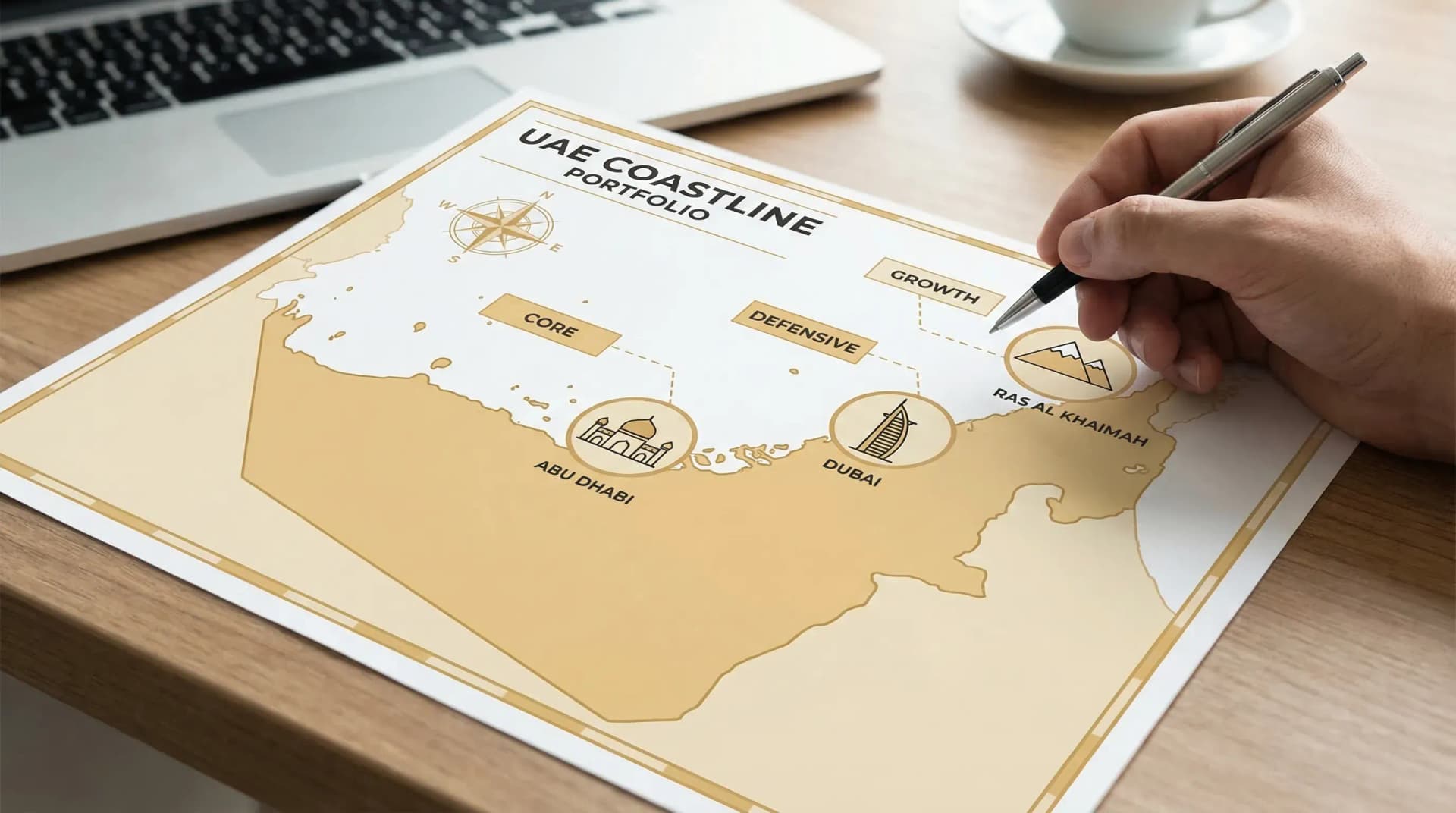
Start with a portfolio mandate (not a shortlist)
Before you compare floorplans, lock in the “rules” of your portfolio. This prevents overpaying for the wrong type of asset and helps you say no quickly.
The four decisions that drive everything else
Return target: Are you aiming for income today, capital growth, or a blend?
Time horizon: 2–3 years (tactical), 4–7 years (cycle-aware), or 8+ years (compounding and generational planning).
Liquidity needs: Do you need the option to sell quickly, or can you hold through quieter periods?
Residency and lifestyle intent: If Golden Visa eligibility matters, you will structure differently than a purely financial buyer (Azimira covers Golden Visa pathways extensively, for example in its Golden Visa guides).
A simple portfolio “role” model
Instead of thinking “I want three properties”, think “I want three roles covered”.
| Portfolio role | What it’s for | Typical asset characteristics | What can go wrong if you over-allocate |
|---|---|---|---|
| Core | Liquidity and resilience | Prime locations, deeper resale market, straightforward lettability | Returns can compress if you overpay for “safety” |
| Growth | Appreciation and upside capture | Early-phase/off-plan, infrastructure tailwinds, emerging micro-markets | Construction risk, liquidity risk, execution risk |
| Income | Predictable cash flow | Ready units, stable tenant demand, rentability over aesthetics | Stagnant capital growth if the area matures slowly |
| Optional/Strategic | Personal use, residency, legacy | Larger homes, lifestyle-led buys, trophy assets | Emotional decisions can hurt overall performance |
A winning portfolio typically has a clear core, a measured growth sleeve, and a plan for income stabilisation.
Decide what each emirate does for your portfolio
The UAE is not one market. In practice, a strong UAE properties portfolio uses different emirates for different outcomes.
A 2026-minded way to allocate by emirate
This is not “which emirate is best?”, it is “which emirate is best for this role?”
| Emirate | What investors typically use it for | Why it can work | Key risks to underwrite |
|---|---|---|---|
| Dubai | Core liquidity and global demand | Deep transaction volume, broad tenant base, international visibility | Higher entry pricing in prime segments, supply cycles |
| Abu Dhabi | Defensive stability and institutional demand | Government and corporate demand, steady premium districts | Segment selection matters, some areas are more end-user led |
| Ras Al Khaimah | Growth sleeve and value entry | Emerging luxury positioning, tourism and infrastructure catalysts | Timing and developer selection are critical, liquidity is improving but not Dubai-level |
Azimira’s own research points to strong continued interest in off-plan, plus growing premiums for sustainability and branded residences in 2026 (see the UAE Property Investor Sentiment Barometer: Q1 2026). Use that insight tactically: keep your “core” more liquid, and deploy your “growth” where the market is repricing fastest.
Mix asset types intentionally (apartments, villas, branded, serviced)
Many portfolios underperform because the assets are too similar. If everything is a waterfront one-bed aimed at the same tenant profile, you have concentration risk even if you own in different buildings.
Common building blocks in a UAE properties portfolio
| Asset type | Best suited to | Portfolio strengths | Watch-outs |
|---|---|---|---|
| Studios / 1-beds | Yield focus, flexible tenant demand | Broad renter pool, easier leasing | Higher tenant churn, furnishing decisions matter |
| 2-beds | Balanced income + exit liquidity | Family and professional demand | Entry price jumps, layout quality matters |
| Townhouses / villas | End-user demand, longer holding | Lower churn, lifestyle premium in the right communities | Maintenance complexity, capex planning |
| Branded residences | Premium segment and long-term positioning | Brand-driven demand, often strong resale narrative | Higher entry point and ongoing costs, pick the right operator |
| Serviced apartments | Hands-off income with operator model | Potentially simpler operations for overseas owners | Fee structure, contract terms and true net yield are everything |
Your “core” tends to favour assets with wide end-user and tenant demand. Your “growth” sleeve can include higher-beta assets (for example, early-phase off-plan in a fast-rerating corridor), but only if your underwriting accounts for delivery and liquidity risk.
If you are comparing short-term rental (STR) vs long-let, build your choice into the model rather than deciding later. A practical starting point is Azimira’s STR vs Long-Let ROI calculator explainer.
Combine development stages (off-plan + ready) for smoother performance
A common 2026 mistake is building a portfolio that is 100% off-plan “because the upside is higher”. That can be true, but a portfolio of only construction-stage assets can create cash flow gaps and force sales at the wrong time.
A portfolio-stage mix that tends to be more resilient
Ready (stabiliser): Produces rent, validates your property manager, and helps you learn operating costs in real time.
Near-handover (bridge): Shorter time to income, sometimes with better pricing than fully completed stock.
Early-phase off-plan (growth engine): Where you seek the biggest repricing, but with stricter due diligence.
If you invest off-plan, make the legal framework part of your process, not an afterthought. In the UAE, investor protections typically revolve around escrow, regulated registration, and contract enforceability. Azimira’s legal framework guide for off-plan investing is a solid reference point.
Underwrite like a fund: net yield, total costs, and stress tests
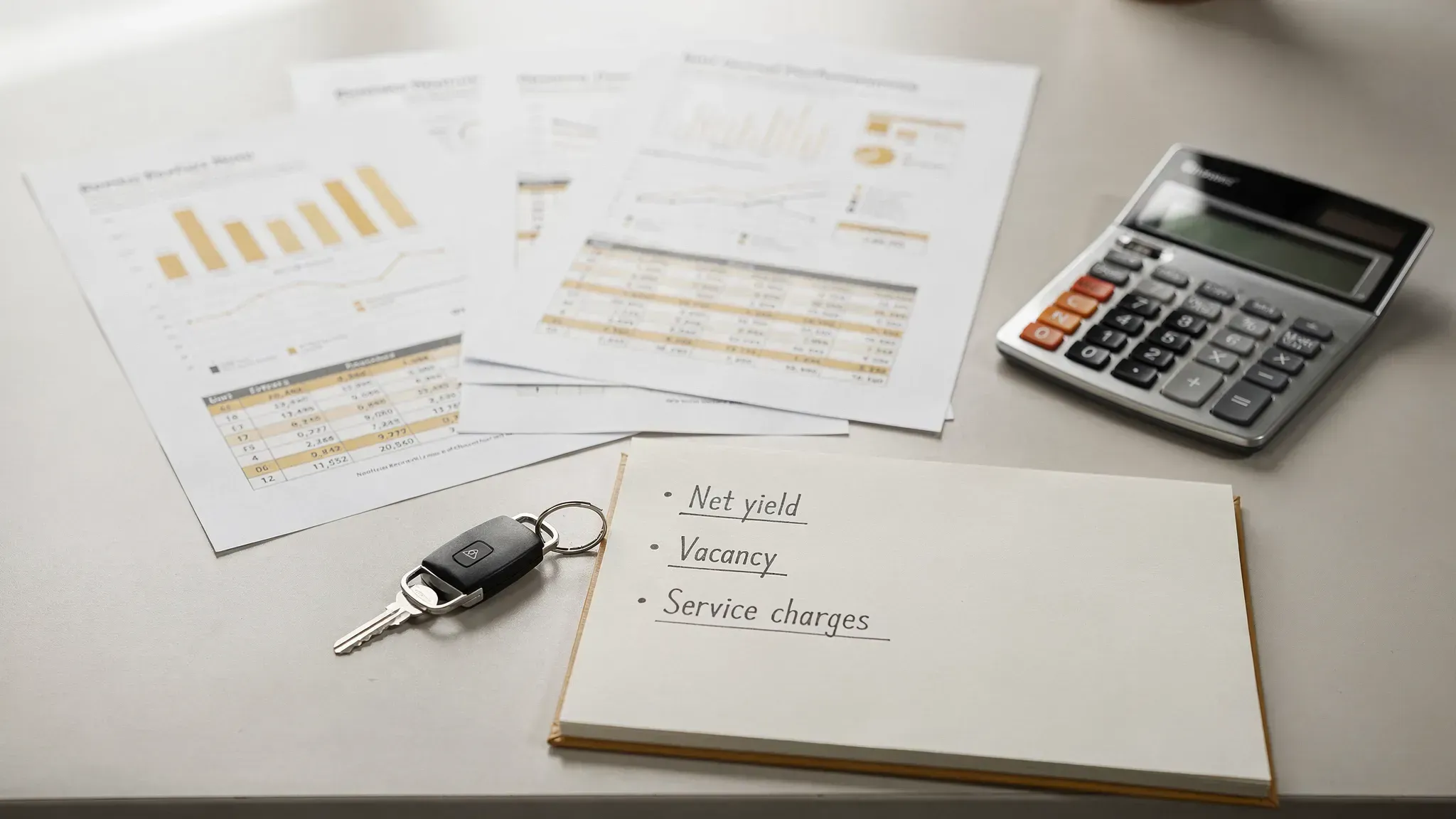
A “winning” UAE properties portfolio is usually won in the spreadsheet. Two properties can look identical on headline gross yield and behave completely differently after service charges, vacancy, letting fees, furnishing, and financing.
The underwriting checklist that most investors skip
| Underwriting item | Why it matters | What to do in practice |
|---|---|---|
| Total acquisition cost | Fees can materially change break-even | Include registration, admin, broker fees, and any developer charges |
| Net yield (not gross) | Net yield pays your bills | Model vacancy, maintenance, management, insurance and service charges |
| Rate sensitivity | 2026 financing still moves with macro conditions | Stress test higher mortgage costs and renewal scenarios |
| Exit costs | Selling is not free | Model transfer fees, agency fees, mortgage settlement costs and developer assignment fees where relevant |
| Currency impact | Overseas buyers can lose returns on FX | Match staged payments to an FX plan (especially for off-plan) |
Azimira has detailed resources on both ROI modelling and cost planning, including how to project your UAE real estate ROI and region-specific ownership cost breakdowns.
Risk management that actually protects portfolio returns (2026 edition)
In 2026, risks are less about “is the UAE safe?” and more about execution: developer quality, delivery timelines, contract structure, and operational reality.
Construction and delivery risk (off-plan)
If off-plan is part of your growth sleeve, quantify delays rather than hoping they do not happen. Azimira’s risk matrix on construction delays vs ROI is useful for building conservative scenarios.
Developer risk (quality, after-sales, and resale perception)
Developer selection influences rentability, maintenance costs, and future liquidity. If you want a structured approach, use a scorecard methodology (see Azimira’s Tier-1 developer KPI scorecard template).
Scam and compliance risk
Avoid “too good to be true” returns and insist on verification of registration, escrow, and documentation. A quick refresher is Azimira’s property scam red flags guide.
Climate resilience (often overlooked)
For coastal and resort-led assets, long-term value depends on build quality and resilience (HVAC sizing, corrosion resistance, drainage, insulation). This affects both operating costs and tenant satisfaction. For RAK-specific considerations, Azimira’s climate guide for property owners is practical.
Build your operating system: banking, management, reporting
A portfolio is only “winning” if it is manageable.
Banking and payments
For non-residents, smooth cash flow often depends on having a functional UAE banking setup and a clear process for payments and receipts. If you are starting from zero, Azimira’s guide to opening a UAE bank account as a non-resident buyer helps you anticipate documentation and timelines.
Property management and performance tracking
Treat management as part of your underwriting, not a post-purchase admin task. Define performance metrics you review quarterly:
- Net income vs pro forma (your original model)
- Occupancy and days vacant
- Maintenance spend vs budget
- Pricing relative to comparable listings
If you are deciding between self-management and hiring a professional, Azimira’s self-manage vs property manager cost-benefit analysis gives a clear framework (even if your portfolio is outside RAK, the logic applies).
Scale your UAE properties portfolio with a sequencing plan
Most investors do better with a phased approach than trying to buy everything at once.
A practical sequencing approach
Phase 1 (Foundation): Buy one asset that you can operate confidently. Prove leasing demand, true costs, and the reliability of your manager.
Phase 2 (Growth): Add a higher-upside asset (often off-plan) once your operating system is stable.
Phase 3 (Balance and optionality): Add the asset that diversifies your tenant profile, location exposure, or income model.
When you scale, decide in advance how you will create the next deposit: savings, portfolio cash flow, refinancing, or strategic exits. If assignment sales are part of your plan for off-plan holdings, read Azimira’s guide to maximising returns through assignment sales before handover.
Frequently Asked Questions
How many properties do I need for a UAE properties portfolio? One can be a portfolio if it is managed with a portfolio mindset, but most investors benefit from 2–4 assets that cover different roles (core, growth, income) rather than owning many similar units.
Is it better to focus on one emirate or diversify across the UAE? Concentration can work if you have deep local knowledge, but diversification across emirates can reduce liquidity and demand risk, especially if one sub-market slows or sees heavier supply.
Should my 2026 strategy be off-plan or ready property? Many winning portfolios use both. Ready property can stabilise income, while selective off-plan can target higher upside. The best mix depends on your horizon, risk tolerance, and cash flow needs.
How do I compare STR vs long-let for portfolio planning? Compare on net yield after management, licensing, vacancy, and furnishing costs, not on peak-season revenue. A model-based approach (like Azimira’s STR vs long-let calculator content) is the safest starting point.
Does a Golden Visa change how I should build a portfolio? It can. If residency is a priority, property value thresholds, ownership structure, and timing (ready vs off-plan documentation) may influence what you buy and how you sequence acquisitions. Always confirm current requirements with official channels and qualified advisers.
Build your UAE portfolio with a specialist partner
Azimira specialises in connecting investors and buyers with premium off-plan opportunities in the UAE, with a particular focus on high-growth markets like Ras Al Khaimah. If you want to build a UAE properties portfolio with clear roles, disciplined underwriting, and access to vetted projects (including pre-launch opportunities), start with Azimira’s investment overview and explore the latest market intelligence on the Azimira blog.
If you would like a portfolio blueprint tailored to your objectives (growth vs income, residency, risk tolerance, and timeline), you can also reach Azimira directly via the main site: azimira.com.
Related articles
What Counts as Good Real Estate Investments in 2026
Learn what makes good real estate investments in 2026, from net yield and demand signals to legal checks, exit plans and UAE opportunities.

Investors Needed for Real Estate? Start With This Plan
Investors needed for real estate? Use this practical plan to define strategy, numbers, due diligence and partners before raising capital.

Investment Marketing Tactics Developers Use at Launch
Understand investment marketing tactics developers use at launch, from scarcity to incentives, and learn how to assess UAE off-plan deals.