
Investment Property Management: Maximise Net Yield in RAK
Investment property management in RAK: reduce vacancy, control costs, optimise pricing and maintenance, and maximise net yield with a practical playbook.
Most investors buy in Ras Al Khaimah (RAK) for the headline yield story, then quietly lose 1 to 3 percentage points of return through vacancy, weak pricing, avoidable repairs, and untracked costs. Investment property management is where gross yield becomes net yield, especially in a fast-evolving market where tenant expectations and short-stay compliance are tightening.
This guide is a practical, operations-first playbook to help you maximise net yield in RAK, whether you own a long-let apartment in an established community, or a premium off-plan unit approaching handover.
Net yield, not gross yield: the metric that actually matters
Gross yield is simple (annual rent divided by purchase price). Net yield is the truth (what you keep after everything it takes to earn that rent).
A clean way to think about it:
- Net operating income (NOI) = collected rent minus recurring operating costs
- Net yield = NOI divided by your total cash invested
Operating costs in RAK commonly include service charges, maintenance and call-outs, letting or renewal fees, property management fees, insurance, compliance costs for short-stays, and vacancy loss.
If you want a deeper ROI framework (including cash-on-cash and total return), Azimira’s ROI guide is a useful companion: How to Project Your Real Estate ROI.
The four biggest net-yield levers in RAK (ranked by impact)
Most “optimisation” advice focuses on cosmetic upgrades. In practice, net yield is usually driven by a small set of controllable levers.
| Lever | Why it moves net yield | What good looks like |
|---|---|---|
| Vacancy control | One empty month can wipe out a big chunk of annual profit | Lease renewals planned early, pricing adjusted quickly, listing quality high |
| Pricing discipline | Underpricing is common in emerging sub-markets | Comparable-led pricing, seasonal strategy, fast feedback loops |
| Maintenance prevention | RAK climate accelerates wear (AC load, humidity, coastal corrosion) | Preventative schedule, approved vendors, fast issue resolution |
| Cost governance | Small recurring leaks compound (service charges, utilities, micro-repairs) | Clear budgets, spending thresholds, monthly reporting |
The rest of this article shows how to operationalise these levers.
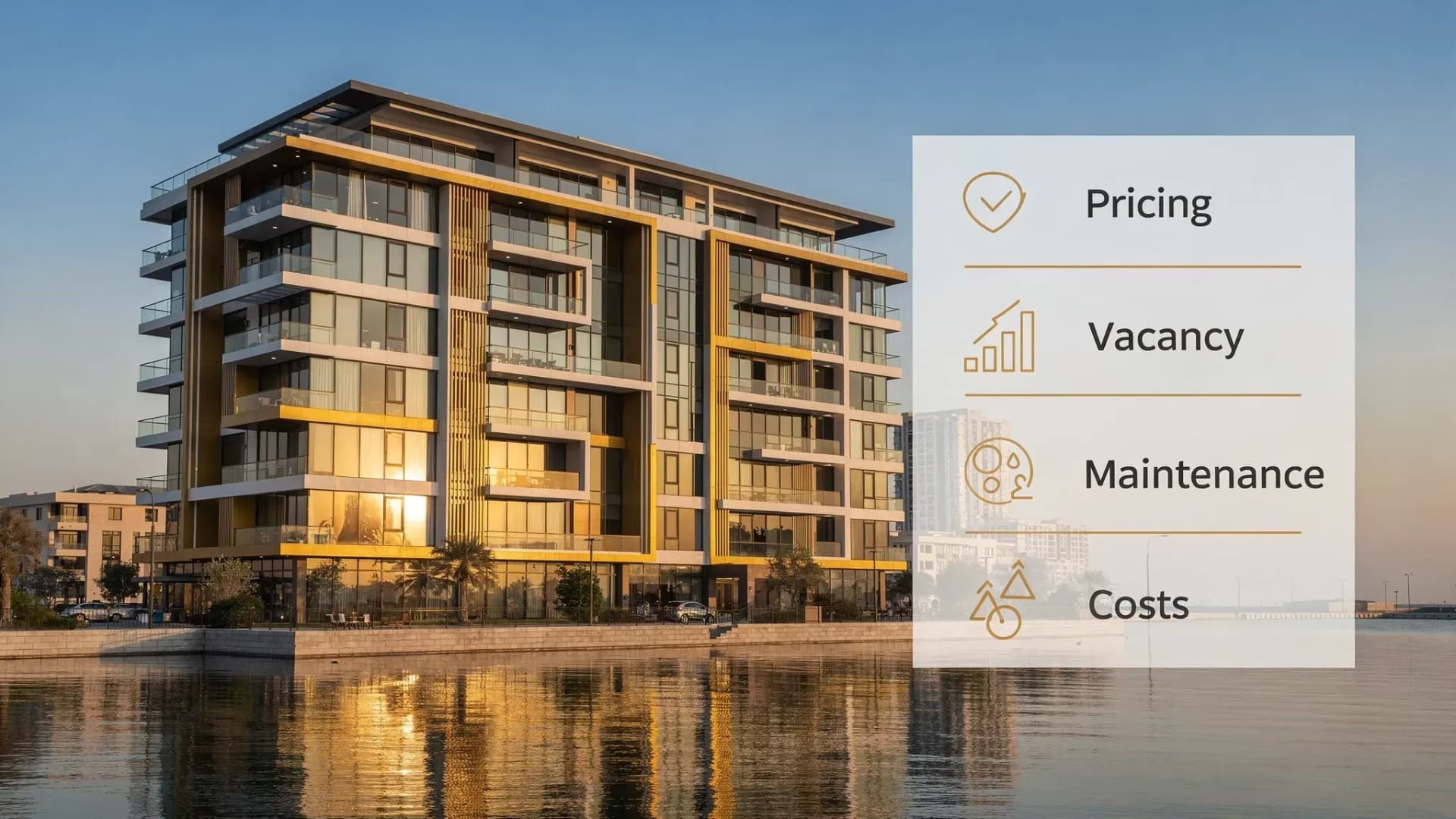
Step 1: Choose the right rental model for your unit (and your risk tolerance)
In RAK, the “best” strategy depends heavily on location, building rules, and your ability to run operations.
The three common models:
Long-let (annual lease)
Long-let is often the most stable and lowest-touch approach, especially if you prioritise predictable cash flow.
Keys to net yield here are tenant quality, renewal strategy, and maintenance response time.
Short-stay (holiday rental)
Short-stay can outperform in the right unit and location, but it introduces more moving parts: licensing, cleaning turnover, guest comms, dynamic pricing, and higher wear.
If you are considering this route, review the permit requirements first: Getting a Holiday Home Permit in RAK.
Hybrid (seasonal switching)
Some owners run short-stay in peak periods and switch to mid-term or long-let when demand softens. This can work, but only if your building rules and licensing allow it, and you have a management setup that can handle operational changeovers.
For a data-led comparison of the two main models, see: RAK Rental Yield Report: Short-Stay vs Long-Let.
Step 2: Treat handover like a profit event (not an admin task)
For off-plan investors, the biggest management mistake is waiting until handover to think about leasing. Your first tenant (or first 20 guests) is largely determined by decisions you make before keys are in your hand.
Nail snagging and defect resolution before marketing
Every unresolved defect becomes:
- A delayed listing date
- A weaker first impression
- A higher chance of early tenant complaints
If you want a structured checklist, Azimira has a handover-focused guide here: The Ultimate Snagging and Handover Checklist.
Decide furnishing with net yield in mind
Furnishing can increase achievable rent, but it also increases capex, ongoing replacement, and wear.
A useful way to decide is to match furnishing level to tenant profile:
- Studios and premium waterfront units often benefit from furnishing because they attract mobile professionals and lifestyle renters.
- Family-sized units often perform better unfurnished because tenants stay longer and prefer their own furniture.
Azimira’s ROI analysis breaks this trade-off down in detail: Furnished vs Unfurnished RAK Properties.
Put your payment automation in place early
Late service charge payments, missed renewals, and ad-hoc utility handling create stress and cost. If you are overseas, set up a system before you tenant the property.
A practical reference: Automating Service Charge Payments from Overseas.
Step 3: Pricing to minimise vacancy (the fastest net-yield win)
In an emerging market, many landlords anchor rent to:
- What they paid
- What a neighbour claims they achieved
- A “target yield” they want
Net yield improves when you price to the market that exists this month, not the market you hope arrives next year.
Use a three-point pricing method
Azimira has a detailed pricing framework here: The 3-Step Formula to Price Your RAK Rental Right.
The management insight to add is this: time is part of price.
If you are priced 5 percent too high and sit vacant for weeks, your effective annual net yield often drops more than if you priced slightly under the top of market and secured a fast move-in.
Build renewals into your calendar
For long-lets, start renewal discussions early enough to avoid rushed discounts. Also ensure your process aligns with notice requirements.
For landlord and tenant rules that commonly impact renewals, deposits, and notices, see: Tenant Rights in UAE: Essential Guide for RAK Landlords.
Step 4: Tenant quality is a net-yield strategy, not a “nice to have”
A single bad tenancy can erase a year of profits through missed payments, disputes, and property damage.
Screen beyond salary and ID
In the UAE, tenants can be transient. The best screening looks for behaviour signals, not just documents.
A practical approach: 4 Questions to Ask Every Potential Tenant.
Make your rental agreement operationally clear
Ambiguity creates disputes and delayed resolution. A high-performing rental contract is specific about:
- Maintenance responsibilities
- Utility handling
- Notice periods
- Early termination
Reference clauses to include: 6 Essential Clauses Your RAK Rental Agreement Must Include.
Step 5: Engineer maintenance like an asset manager
RAK’s climate means maintenance is not optional, it is either planned or expensive.
Two principles improve net yield quickly:
Preventative beats reactive
A simple monthly checklist reduces large failures (especially AC and water leaks). If you need a template: The Monthly Maintenance Checklist Every RAK Property Owner Needs.
Standardise vendors and approval rules
If you are remote, define:
- A pre-approved vendor list
- A spending threshold your manager can authorise without asking
- Evidence standards (photos, quote, invoice, completion confirmation)
For a detailed budgeting view (so you are not surprised mid-year), see: RAK Property Maintenance Costs: Annual Budget Guide.
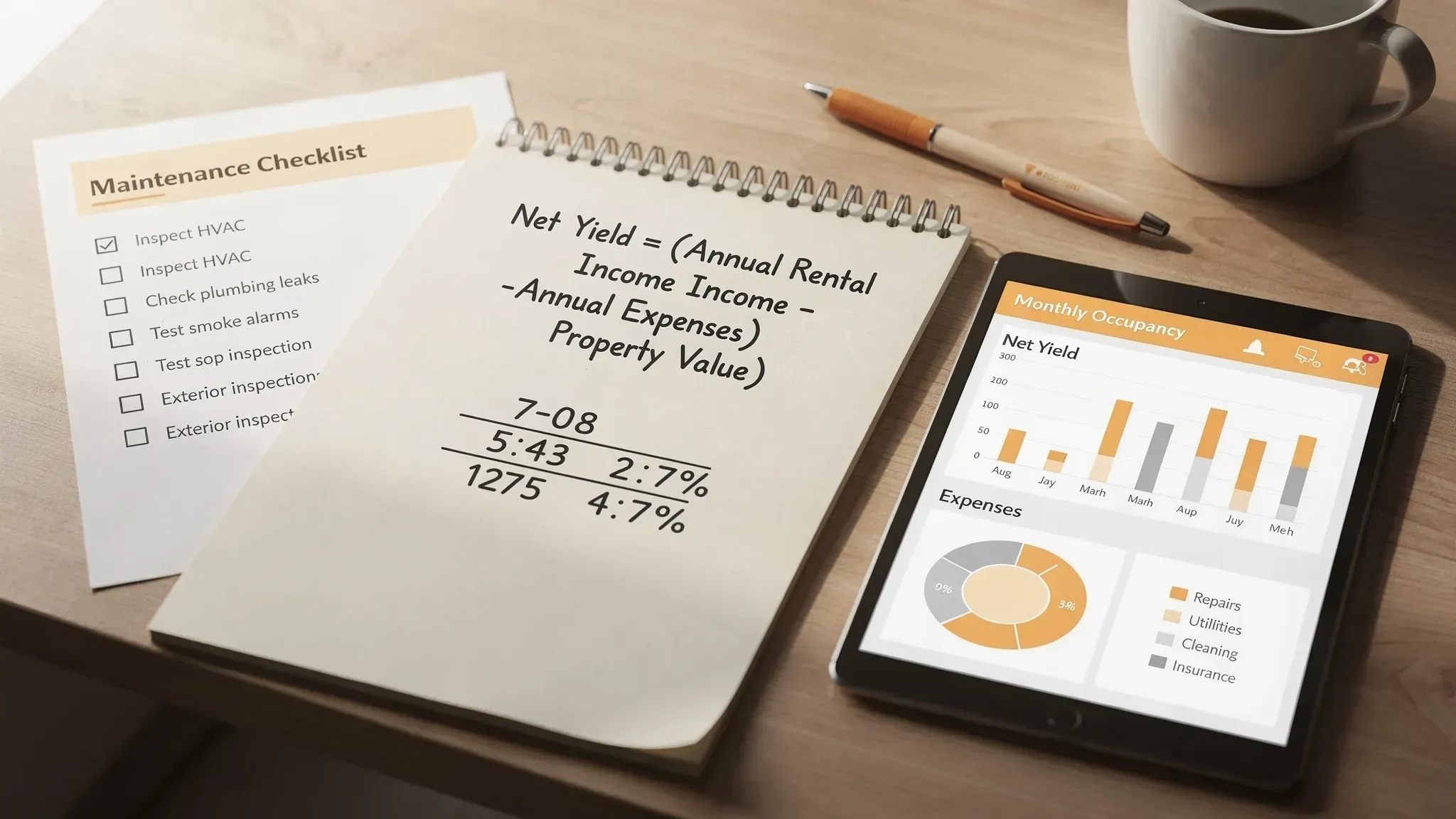
Step 6: Track performance monthly (or you are guessing)
“Feels like it’s doing well” is not management. Net yield improves when you measure the drivers.
Here is a simple owner reporting template that works for both long-let and short-stay:
| KPI | What to track | Why it matters |
|---|---|---|
| Occupancy (or tenancy days) | Days occupied per month | Vacancy is usually the largest profit leak |
| Achieved rent (or ADR) | Actual rent collected, not advertised | Shows pricing power and discounting |
| Net income | Rent minus recurring costs | Your true monthly output |
| Maintenance spend | Planned vs reactive | Reactive spend predicts future issues |
| Response time | Time to resolve issues | Reduces disputes, reviews issues, and churn |
| Renewal pipeline | Next 90 days expiries | Prevents gaps and rushed discounts |
If you use a property manager, you want these metrics in a consistent monthly format, not ad-hoc WhatsApp updates.
Step 7: Decide whether to self-manage or hire a property manager (based on net yield)
Management is not just a cost line. It is a yield-control system.
Self-management can work if you:
- Live locally (or visit frequently)
- Have reliable vendor relationships
- Understand tenancy rules and documentation
Professional management becomes more valuable when:
- You are overseas
- Your unit is premium (higher tenant expectations)
- You run short-stay (higher operational intensity)
- You want scale (two or more units)
Azimira’s cost-benefit analysis is a helpful decision tool: Self-Manage vs Property Manager in RAK.
If you are hiring, use a red-flag based selection process rather than going with the cheapest quote: Finding & Vetting Property Managers in the UAE.
A practical “net yield protection” checklist for RAK owners
Use this as an annual reset (and a pre-handover plan if you are buying off-plan):
- Confirm your rental model fits building rules and licensing needs.
- Complete snagging and close defects before first listing.
- Set furnishing level to match tenant profile, not personal taste.
- Build a preventative maintenance schedule (especially AC, seals, and plumbing).
- Standardise vendors, spending approvals, and documentation.
- Price from comparable evidence, then adjust quickly to reduce vacancy.
- Track monthly KPIs, including net income and maintenance split (planned vs reactive).
- Review insurance, especially liability and loss-of-rent considerations.
Frequently Asked Questions
What is the difference between gross yield and net yield in RAK? Gross yield is annual rent divided by purchase price. Net yield accounts for vacancy and operating costs such as service charges, maintenance, insurance, management fees, and compliance, so it reflects what you actually keep.
Is investment property management worth paying for in Ras Al Khaimah? It can be, especially for overseas owners, premium units, or short-stay strategies where pricing, response time, and compliance directly impact occupancy and reviews. The key is whether management improves net results after fees.
How can I increase net yield quickly without renovating? The fastest wins are usually reducing vacancy (better pricing and faster leasing), tightening maintenance response, and controlling recurring costs through preventative schedules and vendor standardisation.
Do I need a licence to run a holiday rental in RAK? Often yes, short-stay operation typically requires registration and a permit, plus ongoing compliance. Requirements can vary, so confirm before listing. Azimira’s guide is a good starting point.
What should I ask a property manager before hiring them? Ask how they handle licensing and compliance, how they select tenants, their maintenance approval process, what reporting you receive monthly, and whether client money is handled with clear accounting and documented statements.
Maximise net yield with a management plan built for RAK
If you are buying (or already own) an investment property in Ras Al Khaimah and want to protect performance from day one, Azimira can help you align the right asset, rental strategy, and management setup.
Explore Azimira’s RAK investment approach at Azimira, or speak with the team about curated opportunities and portfolio strategy via the investment page.
Related articles
What Counts as Good Real Estate Investments in 2026
Learn what makes good real estate investments in 2026, from net yield and demand signals to legal checks, exit plans and UAE opportunities.

Investors Needed for Real Estate? Start With This Plan
Investors needed for real estate? Use this practical plan to define strategy, numbers, due diligence and partners before raising capital.

Investment Marketing Tactics Developers Use at Launch
Understand investment marketing tactics developers use at launch, from scarcity to incentives, and learn how to assess UAE off-plan deals.