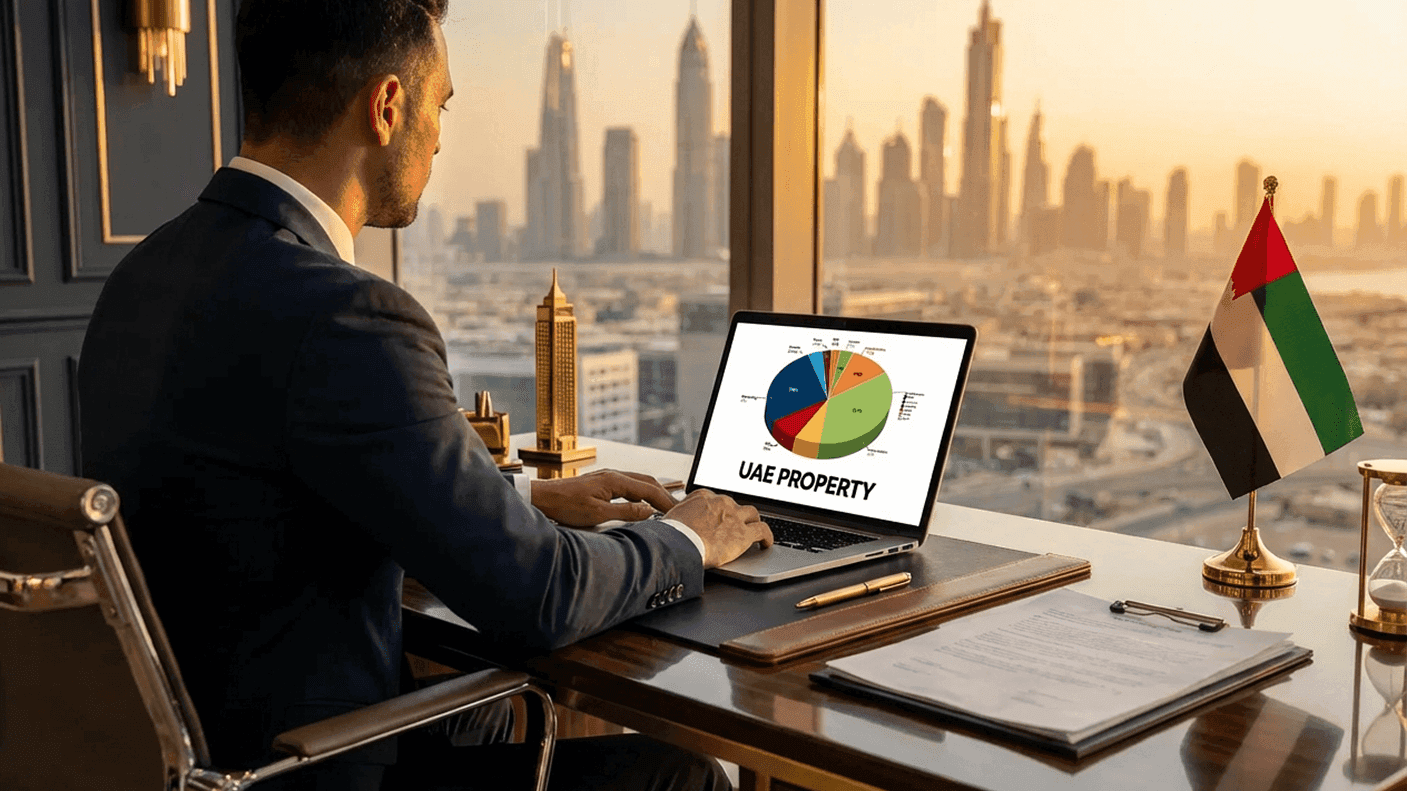
How to Diversify an Investment Portfolio with UAE Property
Learn how UAE property can diversify your investment portfolio with smart allocation, risk controls and UAE market insights, including Ras Al Khaimah.
Market uncertainty is no longer a “one bad year” problem. In 2026, many investors are dealing with a mix of higher-for-longer rates, equity volatility, and changing tax rules in their home countries. That backdrop is exactly why UAE property is increasingly being used as a diversification sleeve inside a broader investment portfolio, not as an all-in bet.
The key is to approach UAE real estate the same way you would any other allocation: define the role it plays, size it appropriately, diversify within the asset class, and manage the risks that come with property ownership.
What diversification really means for an investment portfolio
Diversification is not just “own more things.” It is building a portfolio where different holdings respond differently to the same economic shock.
UAE property can help because it often brings:
-
A different return driver than public markets (rent, tourism demand, local infrastructure cycles, supply pipelines).
-
A different risk profile than stocks and long-duration bonds (less daily volatility, but higher transaction costs and slower liquidity).
-
Potential currency diversification for investors whose base currency is not USD-linked (the AED is USD-pegged, so exposure behaves more like USD than like EUR or GBP).
It is not a guaranteed hedge, and it is not “uncorrelated forever.” But it can be a useful diversifier when used deliberately.
Why UAE property is a common diversification choice
Most investors consider UAE real estate for one (or a combination) of these reasons:
Tax structure that can improve net returns
The UAE is widely known for a favourable personal-tax environment for property investors, particularly compared to many high-tax jurisdictions. Your home-country tax still matters, but UAE-side taxation is often simpler.
If you want the full breakdown of fees and tax considerations, see Azimira’s guide: Complete Guide to UAE Property Tax: Understanding the Tax-Free Advantage.
A “real asset” income stream
A well-selected rental property can add cash-flow characteristics to a portfolio that is otherwise dominated by paper assets.
Multiple market profiles inside one country
The UAE is not one uniform market. Dubai, Abu Dhabi, and high-growth emerging markets like Ras Al Khaimah can behave differently across the cycle (pricing, buyer mix, supply, and yield dynamics).
Off-plan structures that can be capital-efficient
Off-plan investing can allow staged payments rather than full capital outlay on day one, which can matter when you are trying to manage liquidity across an investment portfolio.
For a practical, risk-aware overview, start here: Beyond the Hype: A Practical Guide to Off-Plan Investing in the UAE.
Decide the job UAE property will do in your portfolio
Before choosing a location or a unit, decide why this allocation exists. In portfolio terms, UAE property usually fits one of three roles.
| Portfolio role | What you optimise for | Typical property approach | Key trade-off |
|---|---|---|---|
| Core stabiliser | Durability, resale liquidity, consistent tenant demand | Established communities, proven rental depth, conservative leverage | Lower upside than early-stage markets |
| Balanced growth and income | A mix of yield and appreciation | Mix of long-let and short-stay viable assets, staged entry | Requires more active monitoring |
| Opportunistic growth sleeve | Higher capital growth potential | Early-phase off-plan, pre-launch access, emerging districts | Higher construction and exit-timing risk |
A common mistake is buying a “high yield” unit when you actually need a liquidity-friendly core holding, or buying speculative off-plan when you really need near-term income.
How to diversify within UAE property (so you are not just concentrating risk)
If you buy one unit in one building with one tenant type, you might be “diversified” across asset classes, but you are still concentrated inside your property sleeve.
Here are practical diversification levers that investors use in the UAE.
1) Diversify by emirate (and by micro-market)
At a high level:
-
Dubai tends to offer depth, liquidity, and global visibility.
-
Abu Dhabi can be appealing for investors prioritising stability and institutional-grade demand drivers.
-
Ras Al Khaimah (RAK) is frequently used as a higher-growth allocation, especially in premium coastal communities.
Within any emirate, micro-market selection matters more than the headline. If you are exploring RAK specifically, Azimira’s market outlook content is a strong companion: RAK Real Estate Market Outlook: Prices, Supply & Yields Through 2027.
2) Diversify by property type
Different property types can behave differently in vacancies, tenant churn, service charges, and resale depth.
-
Apartments can be easier to place with tenants and can have lower entry prices.
-
Townhouses and villas can attract longer-tenure family tenants (often a different demand pool).
-
Serviced apartments can be a separate model with different operating assumptions.
If serviced units are on your shortlist, compare the operational reality before you buy: Serviced Apartments in RAK: Hotel-Style Returns for Investors.
3) Diversify by rental strategy (long-let vs short-stay)
Short-stay can offer higher upside but tends to be more operationally intensive and seasonal. Long-let can be steadier but may have lower peak yield.
Azimira has tools and research to help you compare the two models:
4) Diversify by development stage (off-plan vs ready)
Ready property can start producing income sooner (subject to leasing). Off-plan can be a more growth-oriented approach, but you take completion and delivery risk.
A useful way to compare is IRR (not just headline yield): Off-Plan vs Ready Property: 5-Year IRR Modelling for RAK Investments.
5) Diversify by developer and project quality
Developer risk is real, especially for off-plan. Diversification here is not about owning “more developers” blindly, it is about avoiding single-point failure.
Two practical resources:
-
Scam and due diligence warning signs: 4 Red Flags That Scream Property Scam in the UAE
-
A structured way to assess quality: What Makes a Tier-1 Property Developer? The Definitive KPI Scorecard Template
6) Diversify by financing structure and cash-flow timing
Leverage can amplify returns but can also amplify stress if rates move or vacancies rise. Some investors reduce portfolio strain by mixing:
-
Cash purchases for stability and faster execution.
-
Mortgages where leverage is part of the plan.
-
Developer payment plans to spread capital calls across time.
For a focused comparison in RAK: Developer Financing vs Bank Mortgage: Which Is Better in RAK?.
Simple allocation examples (for context, not personalised advice)
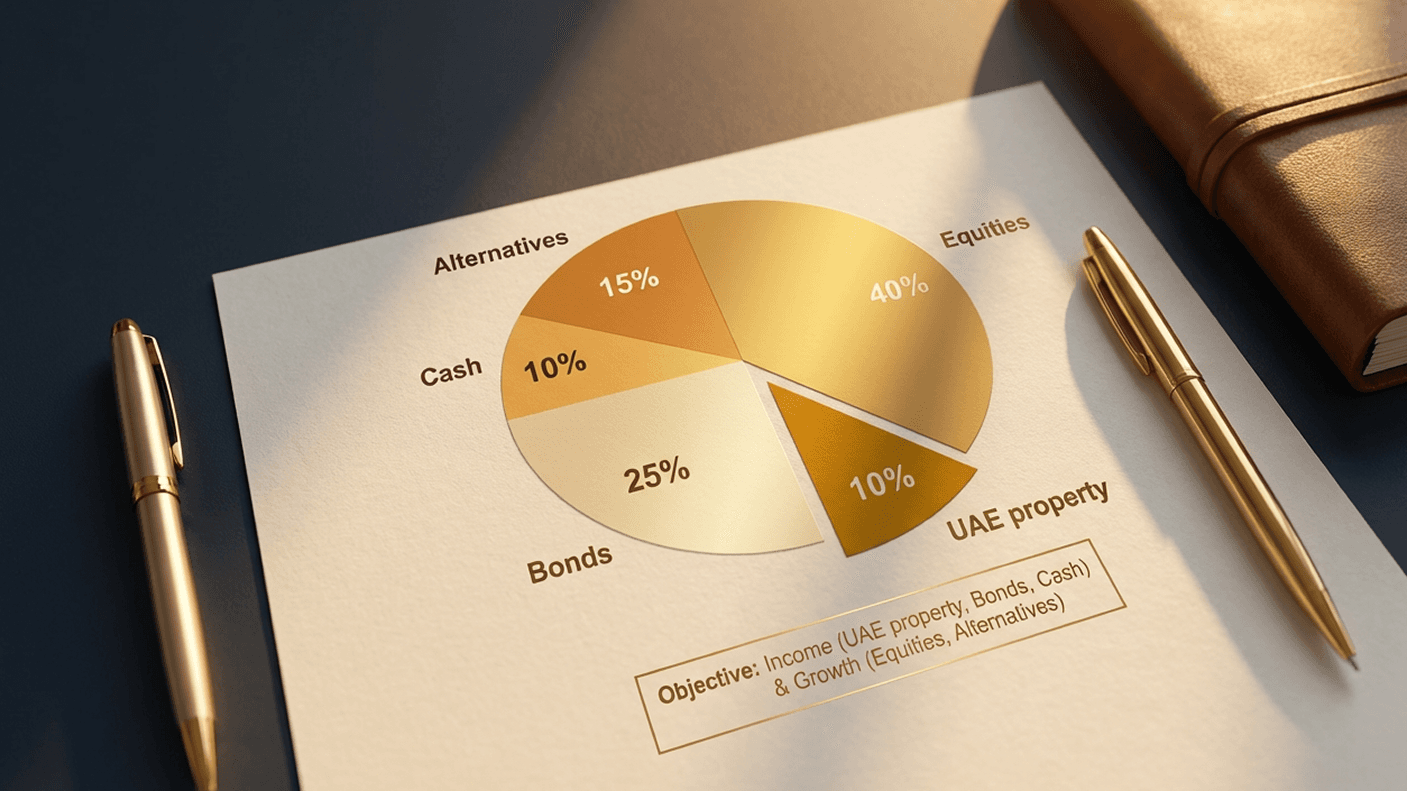
There is no universal “correct” percentage for UAE property in an investment portfolio. It depends on liquidity needs, risk tolerance, existing property exposure, and your ability to manage an international asset.
Still, many investors find it helpful to think in ranges.
| Investor goal | Illustrative UAE property allocation range | Example approach to diversification |
|---|---|---|
| Income-focused | 5% to 15% | Bias toward ready or near-completion assets, long-let heavy, conservative leverage |
| Balanced growth and income | 10% to 25% | Split between an income unit and an off-plan growth unit, diversify by location and tenant type |
| Growth-oriented | 15% to 35% | Larger off-plan sleeve, staged payments, multiple micro-markets, strict exit-plan discipline |
These are not recommendations. They are a way to structure your thinking so your property allocation does not accidentally become a concentration.
The key metrics to track (so the property sleeve behaves like an investment)
Property feels tangible, which can make investors forget to run it like a portfolio position. Track a few core metrics consistently.
| Metric | What it tells you | Why it matters for diversification |
|---|---|---|
| Net yield | Income after realistic costs | Helps you compare property to bonds, dividends, or cash rates |
| Cash-on-cash return | Return on actual cash deployed (especially with payment plans) | Useful when capital is staged and opportunity cost matters |
| IRR | Time-weighted return across cash flows | Better for comparing off-plan vs ready and exit timing |
| Vacancy and lease-up time | Leasing friction and market depth | A hidden “risk premium” inside your income forecast |
| Concentration exposure | Share of portfolio in one building, one emirate, one tenant type | Prevents single-event risk from dominating results |
If you want a deep dive on modelling and ROI components, this companion guide is useful: How to Project Your Real Estate ROI: A Comprehensive Guide to Calculating Tax-Efficient Yield in the UAE.
Risk controls that matter most when adding UAE property
Diversification only works if the new allocation does not introduce unmanaged risks.
Currency and transfer planning
Even with an AED peg, your base currency may move. Also, transfers for deposits and progress payments can create timing risk. Plan funding timelines early, especially for off-plan.
Liquidity and exit strategy
Property is not a same-day sell. Build your exit plan before you buy.
A practical framework for holding periods and timing: Exit Strategy Timeline: How Long to Hold RAK Property for Maximum Returns.
Documentation and registration hygiene
International investors should treat documentation like a non-negotiable risk control. Missing paperwork is not a minor inconvenience, it can become an inability to sell, lease, or finance.
Operational risk (management, maintenance, compliance)
If you are not UAE-based, the quality of your property management often determines the outcome. Budget for ongoing costs realistically and choose managers with proper licensing and reporting.
Putting it all together: a practical diversification blueprint
A disciplined way to diversify an investment portfolio with UAE property looks like this:
-
Define the role (income, balanced, growth).
-
Set allocation boundaries (a range you will not exceed).
-
Diversify inside the sleeve (emirate, asset type, rental model, and development stage).
-
Underwrite conservatively (net yield, not brochure yield).
-
Pre-plan risk controls (currency plan, property management, exit triggers).
If you do those steps, UAE property can behave like an intentional portfolio component rather than a stand-alone bet.
Frequently Asked Questions
Is UAE property a good way to diversify an investment portfolio? UAE property can diversify an investment portfolio by adding real-asset exposure and rental income potential, but it also introduces liquidity, operational, and market-cycle risks that must be managed.
Should I buy off-plan or ready property for diversification? Ready property often suits investors prioritising earlier income and lower delivery risk, while off-plan can suit a growth sleeve due to staged payments and potential appreciation. Many diversified approaches combine both.
How do I diversify within UAE property if I can only buy one unit? If you can only buy one unit, diversify through conservative underwriting, strong developer selection, choosing a location with deep rental demand, and selecting a unit type with broader tenant appeal and resale liquidity.
Does UAE property reduce tax compared to my home country? The UAE side is often tax-light for property, but your home-country rules may still tax rental income or capital gains. You should confirm treatment with a qualified cross-border tax adviser.
What are the biggest risks when adding UAE property to a portfolio? The main risks are liquidity (time to sell), project delivery risk (off-plan), currency movement versus your base currency, underestimating total costs, and weak property management.
Explore UAE property opportunities with Azimira
If you want UAE property to strengthen your investment portfolio, the next step is not browsing listings, it is building a clear allocation plan and matching it to the right projects.
Azimira specialises in connecting investors with curated off-plan opportunities in the UAE, with a strong focus on high-growth markets like Ras Al Khaimah. If you are looking for expert market insight, exclusive pre-launch access, and tailored investment strategies, explore Azimira or speak with the team about opportunities that fit your portfolio objectives.
Related articles
What Counts as Good Real Estate Investments in 2026
Learn what makes good real estate investments in 2026, from net yield and demand signals to legal checks, exit plans and UAE opportunities.

Investors Needed for Real Estate? Start With This Plan
Investors needed for real estate? Use this practical plan to define strategy, numbers, due diligence and partners before raising capital.

Investment Marketing Tactics Developers Use at Launch
Understand investment marketing tactics developers use at launch, from scarcity to incentives, and learn how to assess UAE off-plan deals.